


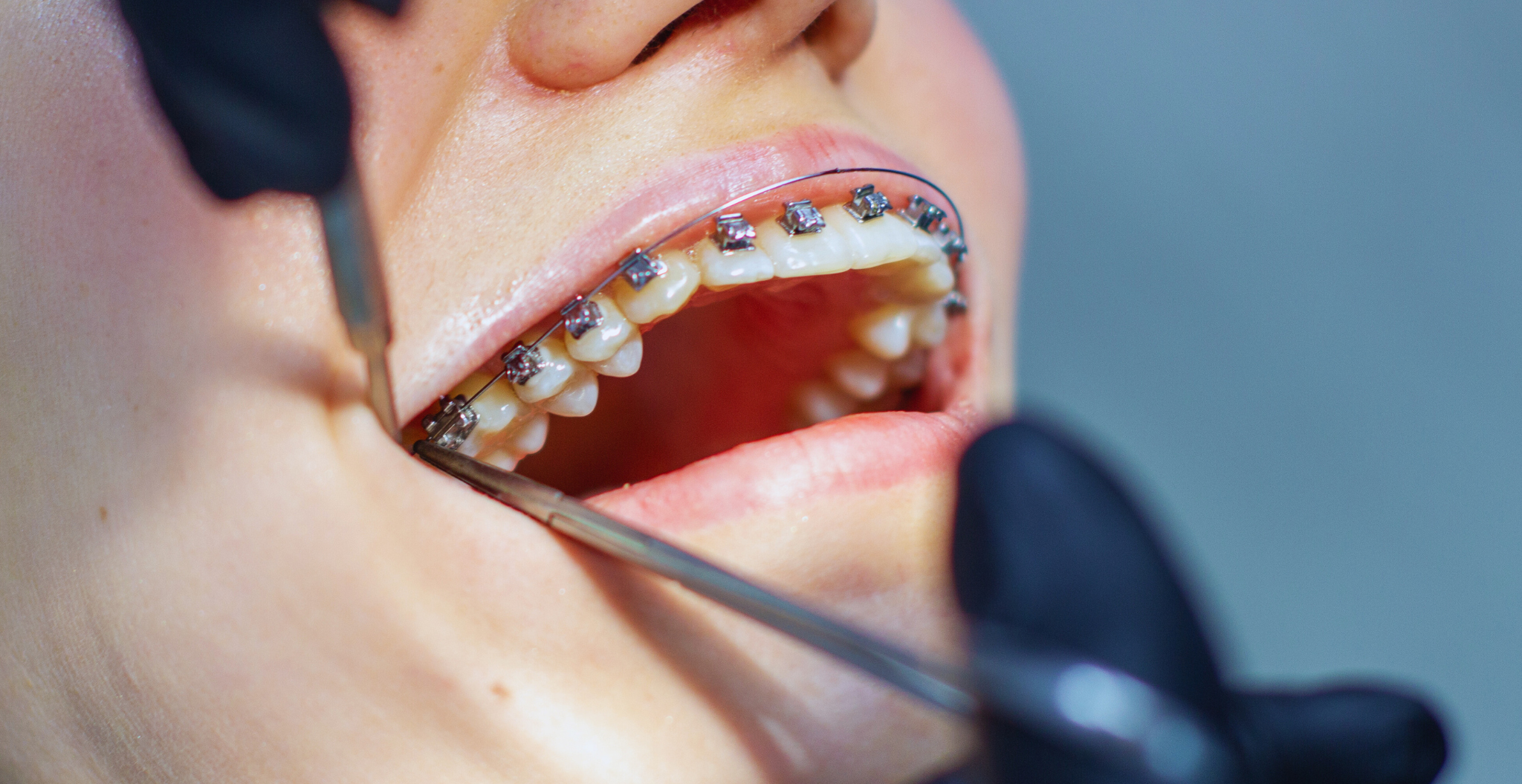
Orthodontic treatment lasts at least two years. Many patients impatiently count down the days until their orthodontic appliance is removed. When this moment finally arrives, many questions arise. The most popular ones are: “Does removing the appliance hurt?”, “How long does it take to remove the orthodontic appliance?” and “What is the process of removing the orthodontic appliance?” If your orthodontic treatment is coming to an end, don’t be surprised – find out what to expect at this awaited visit! Removing the orthodontic appliance – removing the brackets For anyone wearing an orthodontic appliance, it will come as no surprise that its removal starts with colored rubber bands or metal ligatures. Then the orthodontist removes the archwire and brackets. Although this procedure is not too complicated, it raises many questions among patients. The reason is simple – when the appliance is applied, the brackets are bonded to the tooth surface using special glue. Should you be afraid that removing them will damage the enamel? Orthodontists not only have precise tools but also experience in removing orthodontic appliances. So patients should not worry – this procedure will not have a negative impact on their teeth. If the appliance is removed properly, there is no possibility of discoloration appearing on the tooth surface. Removing the orthodontic appliance and cleaning the teeth after removal After removing the orthodontic appliance, there are remnants of glue on the teeth that require thorough cleaning. The orthodontic specialist removes these residues using a scaler and sandblaster, and then proceeds to polish the teeth. This process not only removes any residues but also restores the natural color of the teeth, making them appear whiter. This effect positively influences the overall appearance of the smile. Patients who want to enjoy a healthy and attractive smile can also opt for teeth whitening after removing the orthodontic appliance. Is removing the orthodontic appliance painful? The frequently asked question about pain during the removal of the orthodontic appliance is justified, but this process is usually not painful. Some discomfort may occur, but it is short-lived. It’s worth noting that anesthesia is not typically used during appliance removal because the process itself is quick and effective. An experienced orthodontist usually only needs 10 to 15 minutes to remove the appliance and thoroughly clean the teeth from glue residues. How much does it cost to remove an orthodontic appliance? The cost of removing an orthodontic appliance depends on its type and may vary. Orthodontists usually inform about the costs during the consultation before the procedure. It should be noted that the cost of removing an orthodontic appliance may also include oral cavity hygiene. Patients should therefore be prepared for additional expenses. However, removing the appliance is not the end of the treatment The next stage is retention, which involves maintaining the achieved effects. Various types of retention appliances are used for this purpose, such as fixed retainers, retainer trays, and functional appliances. The choice of the appropriate retention appliance depends on the orthodontist, who selects it according to the patient’s needs. Preparation of the retention appliance often requires taking an impression of the teeth, which usually takes place at the end of the treatment, after thorough teeth cleaning.
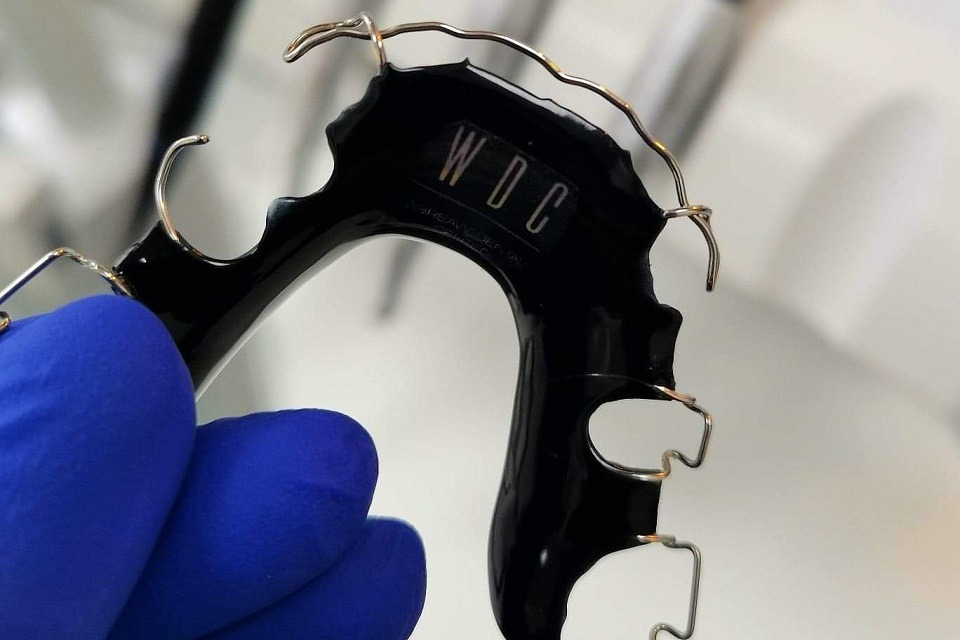
Retention in orthodontic treatment
Retention is the final stage of orthodontic treatment, which involves consolidating the achieved results. Changes in the position of teeth during orthodontics negatively affect the periodontal tissues (i.e. the tissues surrounding the tooth). After removing the orthodontic appliance, the periodontium needs some time to regenerate and consolidate the results. In this context, retention plays a key role. The type of retention is selected by the treating physician. The most commonly used are: Retention plates (i.e. appliances that can be removed). Retainer, i.e. a retention wire glued to the lingual or palatal surface, usually of the front teeth. It is important to remember about daily hygiene of retainers and thorough cleaning of the tooth surfaces on which the retainer is attached. The length of the retention period depends on many factors, such as the type of malocclusion and the age of the patient. In children, the retention period is usually short and sometimes not required at all. In the case of adult patients, it may last several years or even a lifetime. Follow-up visits after removing the orthodontic appliance should take place after 1, 3, 6 and 12 months. In the initial period, the retainer should be worn 24 hours a day, with breaks only for eating and hygiene. Later, according to the orthodontist’s recommendations, you can gradually reduce the frequency of wearing the brace. It is worth remembering that the oral cavity is a dynamic part of the body, subject to constant changes. Minor tooth movements resulting from their natural mobility are a normal and inevitable phenomenon. Long-term maintenance of the achieved treatment results also depends on the proper functioning of the lips, tongue, proper muscle tension, elimination of harmful habits and the possible reconstruction of missing teeth. We invite you for orthodontic consultations with Dr. Aneta Zmorzyńska at Warsaw Dental Center! Appointments can be booked: by phone: 22 542 18 04 by e-mail: kontakt@warsawdentalcenter.pl or via social media news