

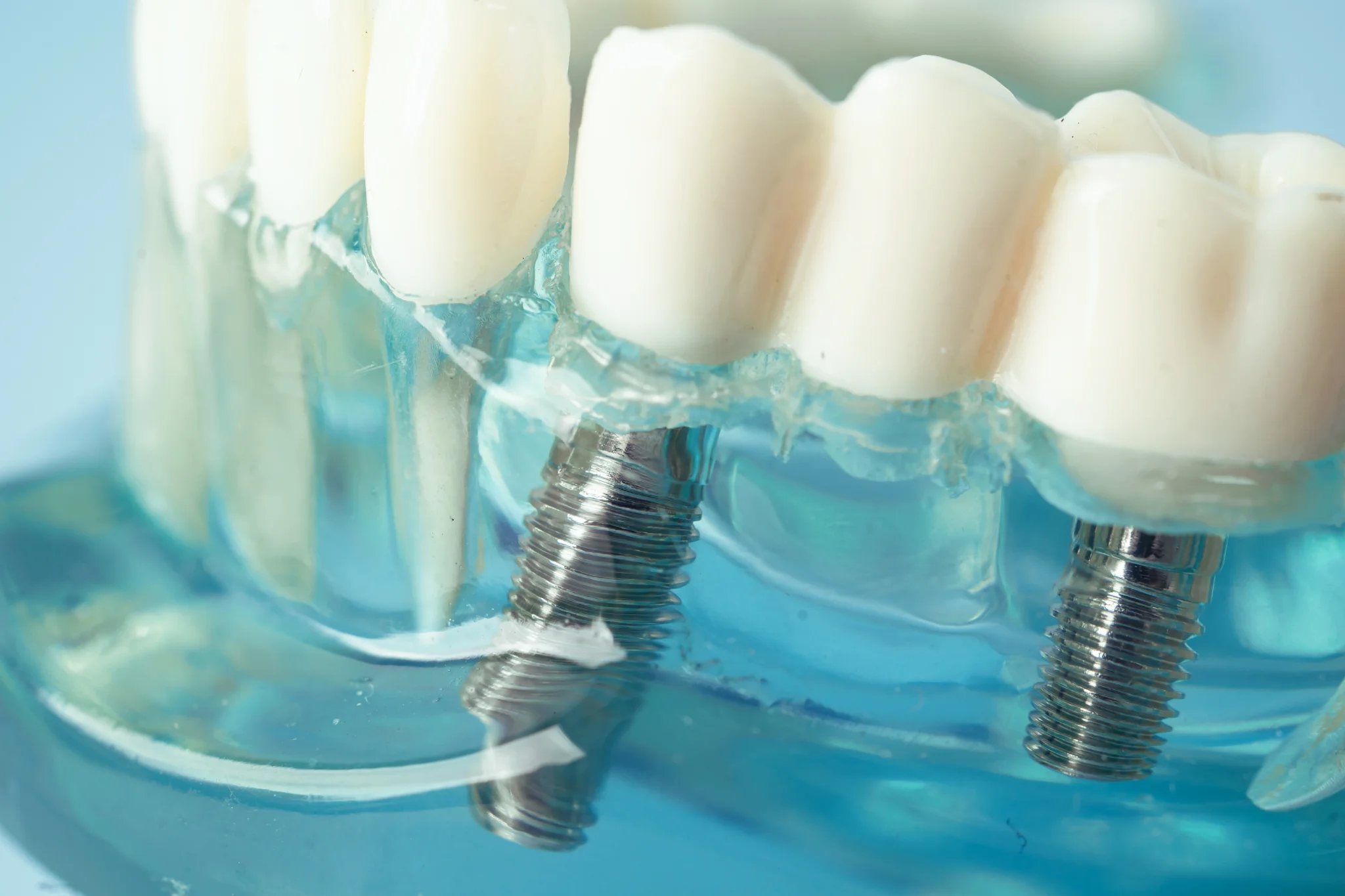
How long does it take to get an implant inserted? Removing a tooth can lead to unfavorable changes in the oral cavity, which can manifest in both the short and long term. Tooth gaps are not only an aesthetic problem but also a functional one. After tooth extraction, problems with biting may occur, as well as the displacement of remaining teeth towards the gap. To avoid these complications, the implant should be inserted as soon as possible, provided there are no contraindications. When should a patient schedule implantation? The best assessment of the timing of the procedure will be made by the implantologist, who will conduct a detailed dental examination and perform necessary computer tomography. The waiting time for implant insertion is highly individual and depends on many factors, such as the patient’s clinical condition, the presence of inflammation, or tissue healing speed. It’s crucial to undergo radiological diagnostics and entrust oneself to an experienced specialist to ensure that implantation results in long-term success. What changes occur in the oral cavity after tooth extraction? Even the removal of a single tooth disrupts homeostasis, or the body’s balance. This has serious consequences not only within the extracted tooth but also for the entire stomatognathic system. Bone defects after tooth extraction In individuals who have lost teeth long ago, irreversible changes in the oral cavity may occur. This manifests not only as a bite disorder but also as bone loss, leading to the atrophy of the alveolar process. This is visible as a characteristic narrowing from the side of the tooth gap. By taking care of oral health and responding appropriately to tooth loss, one can minimize the risk of complications and ensure a better quality of life. Immediate implantation after tooth extraction Immediate implantations are procedures involving the insertion of implants directly after tooth extraction. They allow for placing the implant in the site of the extracted tooth during one visit. Often, immediate implantation does not require additional incisions since the gap in the alveolar process created after tooth extraction is utilized. Conditions for performing immediate implantation If the doctor does not identify any systemic contraindications and there are suitable conditions of the bone substrate, immediate implantation can be performed right after extraction. The condition is the appropriate quality and size of the alveolar process. Bone integration period The healing of the bone substrate using bone substitute material usually takes from 3 to 6 months. This process is individual because bone regeneration occurs differently in each patient. Key in the osseointegration period are follow-up visits during which the implantologist assesses the bone healing. An X-ray is taken at each visit to evaluate the process. Properly healed bone substrate qualifies the patient for implantation surgery. Inflammatory conditions around teeth In cases of inflammatory conditions around teeth, which are indications for extraction, immediate implantation is not recommended. There is a risk of bacterial proliferation, which can lead to the lack of bone integration with the implant. In such situations, implantation is usually postponed for a period of 4 weeks. Contraindications for implant placement Patients under 16 years of age – related to bone development, some specialists postpone the procedure to a later age Pregnancy Advanced osteoporosis Periodontitis Cancer diseases Diabetes Mental illnesses Treatment with bisphosphonates Unfavorable anatomical conditions within the oral cavity Temporary local contraindications, e.g., injuries, mucosal inflammation
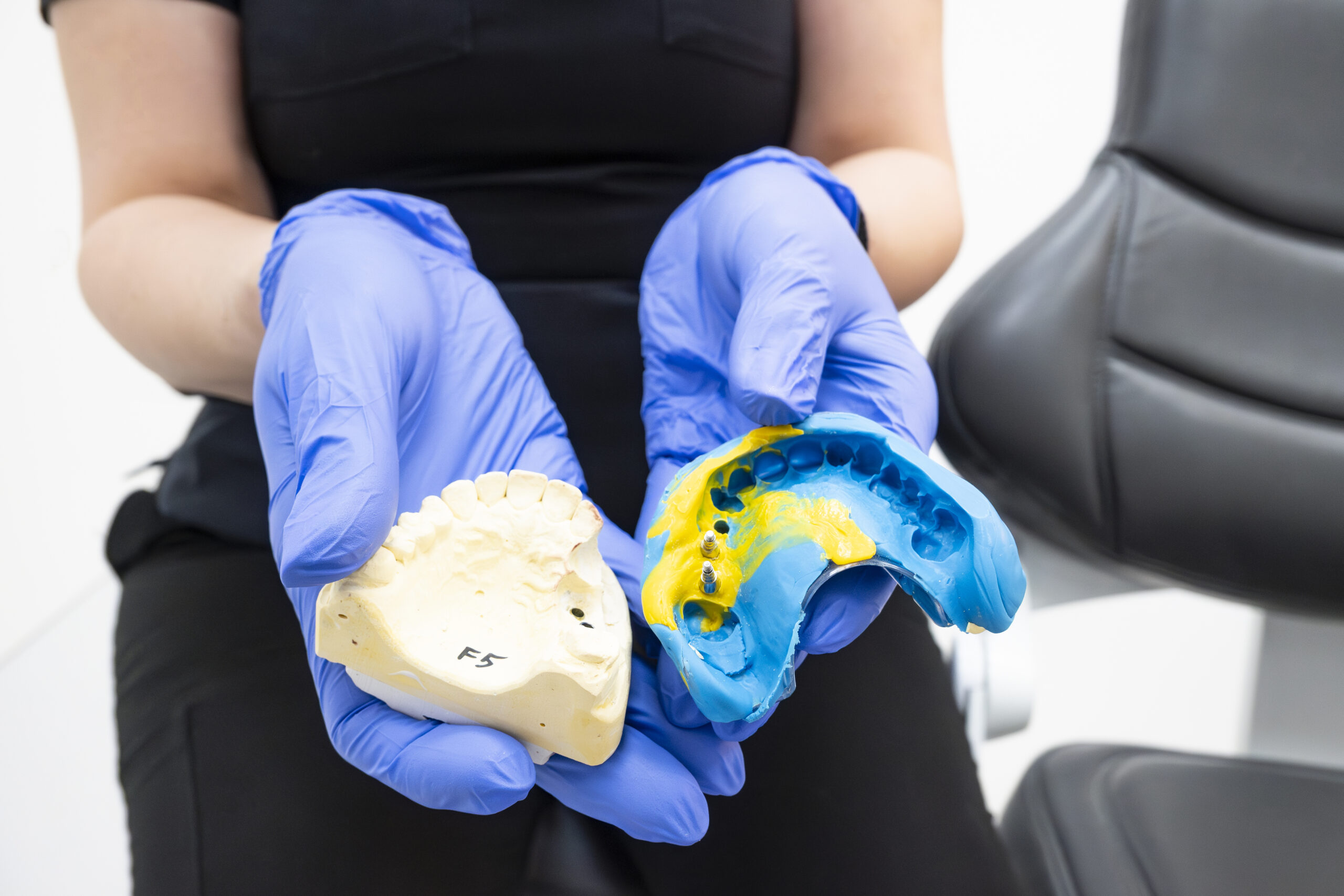
Benefits of choosing dental implants
Implantology is one of the fastest-growing fields in dentistry, offering patients a wide range of possibilities and therapeutic methods. In the field of dental implantology, Warsaw Dental Center boasts several high-class specialists who achieve excellent, predictable treatment outcomes. Dental Implants Dental implants represent the most effective alternative to a natural tooth root, both biomechanically and aesthetically. They allow for the placement of various prosthetic reconstructions, such as crowns or bridges, providing patients with stability and comfort. The dentist places implants in the jawbone’s alveolar process of the mandible or maxilla. Thanks to them, prosthetic works are not only stable but also do not shift in the oral cavity, resulting in patient comfort during daily oral hygiene and normal functioning. The most commonly used material for dental implant production is titanium or its alloys, which are biocompatible and safe for the surrounding tissues. Their high affinity for oxygen eliminates the risk of the body’s immunological reaction, making them an ideal choice for patients. Compared to other methods of filling interdental spaces, implants do not require intervention in adjacent teeth, thus protecting the patient’s natural tooth structure. They help avoid the need to grind adjacent teeth, which often leads to weakening them. To achieve optimal therapeutic and aesthetic results in implant prosthetics, it is essential for clinics to be equipped with state-of-the-art medical equipment and to use certified materials and implants of the highest quality. An experienced doctor also plays an important role in performing procedures with the utmost care and precision. An important aspect often raised by patients is the fear of pain during the implantation procedure. However, thanks to the use of effective local anesthesia or sedation, the implantation procedure is entirely painless, allowing patients to feel comfortable and safe. Contrary to common belief, implantation is less invasive than many other dental procedures, such as tooth extraction. Most patients can return to normal functioning as soon as the day after the implantation procedure.
What are the consequences if you don’t replace a missing tooth?
Tooth loss is not only an aesthetic issue, but a problem with broader consequences. This not only affects appearance, but also affects aspects of daily life such as eating, speaking, and oral health and structure. Despite the availability of modern treatments such as dental implants, dentures and bridges, some people choose to ignore the need to replace missing teeth. Our dentists are here to take a closer look at some of the consequences of untreated tooth loss. Difficulty eating and speaking One of the first areas of life affected by tooth loss is diet. Missing teeth can lead to swallowing food without chewing it properly or even giving up eating certain foods. Such habits can lead to digestive problems and malnutrition. Additionally, tooth loss may interfere with the correct pronunciation, making it impossible to pronounce certain words clearly. In some cases, a lisp may even develop, potentially affecting social interactions. Oral health problems Untreated tooth loss increases the risk of gum disease and bacterial infections. Additionally, the changing position of the remaining teeth can lead to oral space problems such as crowding, crookedness, and uncomfortable pressure. Bone loss and facial sunkening Despite the apparent invisibility of tooth loss, especially in the back of the mouth, the consequences are more significant than they seem. Lack of stimulation of the jawbone causes it to shrink and atrophy, resulting in a sagging chin and mouth. Dental implants provide an effective solution by replacing the roots of missing teeth and maintaining a youthful facial structure. Ready for tooth loss solutions? If you are experiencing the loss of one or more teeth, please contact us on +48 22 542 18 04 to make an appointment at Warsaw Dental Center. Our specialists will be happy to discuss surgical and non-surgical options for tooth replacement with you. Take care of your oral health and restore your smile!

Dental implants: Answers to the most common questions
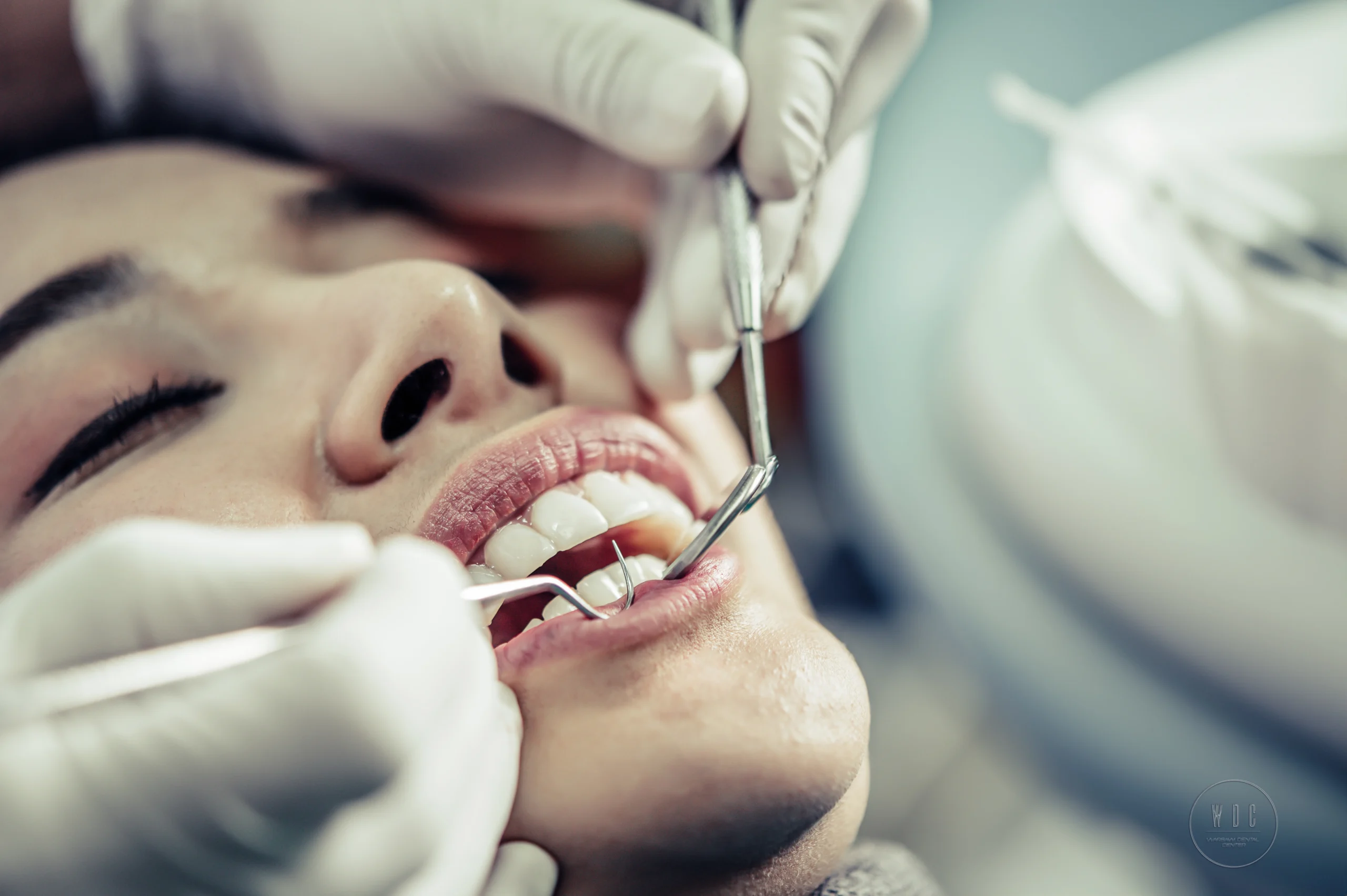
Any restoration, including implants, requires regular inspections.The photo shows a patient at a dentist appointment. Urszuli Leończak. Dental implants have become a popular solution for people who have lost one or more teeth. Although many people have heard about implants, they often have many questions about it.In this article, we will answer the most common questions about dental implants to provide you with the information you need before deciding on implant treatment. If you are looking for a dental clinic where you can receive professional services related to dental implants, we invite you to use our services at the Warsaw Dental Center. You can book an appointment today using our easy-to-use online form or by calling + 48 22 542 18 04. What are dental implants? Dental implants are small, permanent structures that are implanted into the jawbone to replace lost teeth. They consist of an implant rod, onto which a plastic tooth root is embedded, and a prosthetic crown, which acts as a replacement tooth. What are the benefits of choosing dental implants? Dental implants have many advantages over other tooth replacement options. First of all, they are durable and resilient, which means they can last for many years or even a lifetime. In addition, implants look and function just like natural teeth, restoring full aesthetics and chewing ability. Can all patients receive dental implants? Not all patients are suitable candidates for dental implants. Many factors, such as general health, jawbone quality, and hygiene habits, can affect the success of implantation. It is worth consulting with an experienced implantologist who will carry out an appropriate assessment and assess whether implants are suitable for you. What does the dental implant process look like? Implant process tion of teeth consists of several stages. First, the dentist conducts a thorough examination, plans treatment, and performs implantation into the bone. The tissue around the implant then needs to heal, which can take several months. Once the healing process is complete, the dentist places a prosthetic crown on the implant shaft, creating an aesthetic and functional solution. Do dental implants require special care? Dental implants require regular and proper care, just like natural teeth. Daily oral hygiene should be maintained, including brushing, flossing, and rinsing. Regular dental checkups are also important to monitor the condition of your implants and keep them in good condition. Summary: Dental implants are a revolutionary solution for people with missing teeth. They have many advantages and offer a durable and aesthetic solution. If you are interested in implant treatment and are looking for a reputable dental clinic in Warsaw, we invite you to use the services of the Warsaw Dental Center. Contact us today to schedule an appointment and start your journey to a healthy, beautiful smile.