

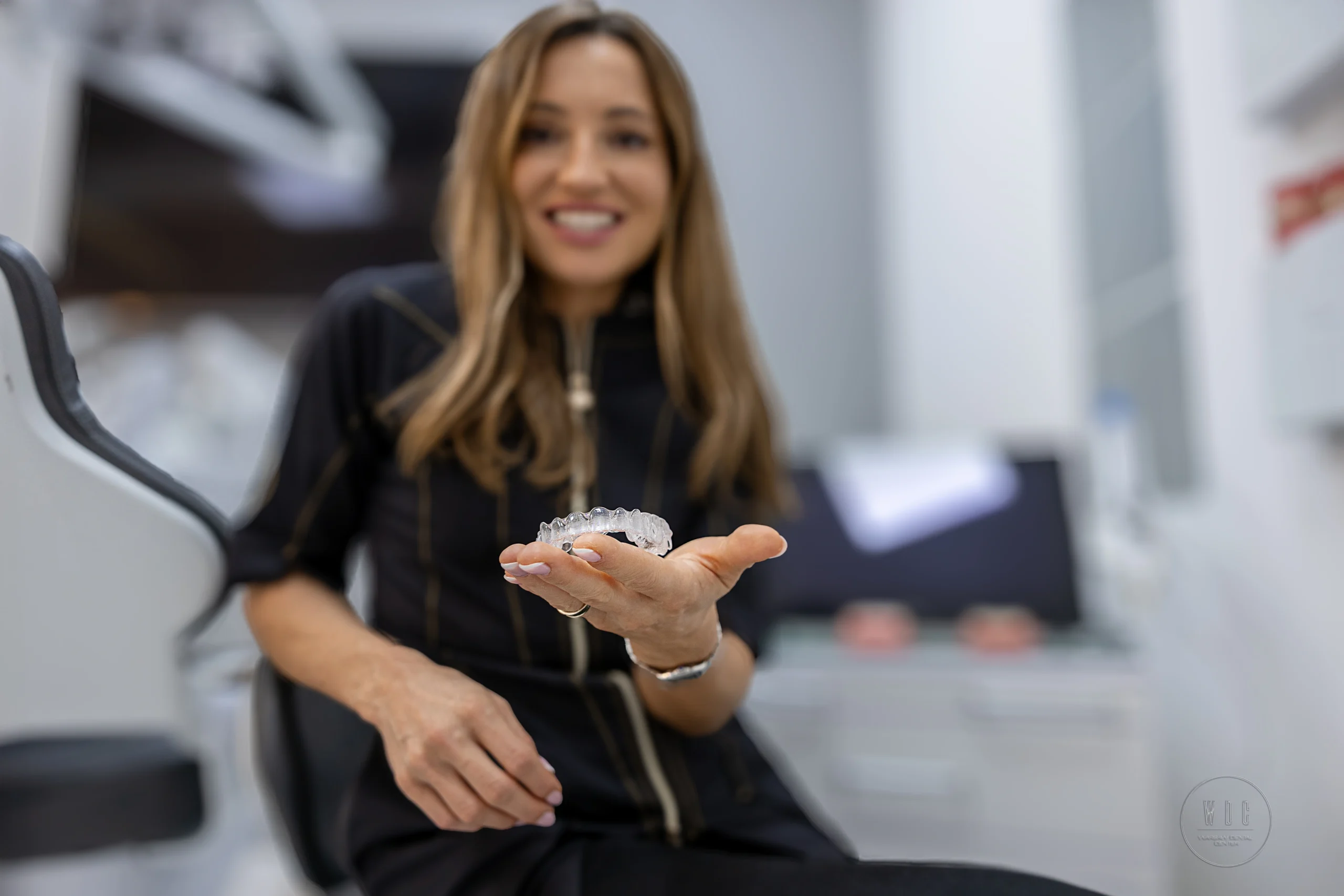
Are you searching for an effective and discreet way to improve your smile? Invisalign in Warsaw is the perfect solution! This modern method of teeth straightening brings numerous benefits to residents of Warsaw and beyond. Clear aligners by Invisalign offer a comfortable and aesthetic alternative to traditional braces, allowing you to straighten your teeth without the need for visible metal brackets and wires. With Invisalign, you can regain your confidence and enjoy a natural, healthy smile while correcting your bite. Why Choose Invisalign in Warsaw? Invisalign is highly precise and effective in addressing both simple and complex dental issues. The aligners are custom-made to fit your teeth, ensuring maximum comfort and efficiency during treatment. By wearing the aligners for 20-22 hours a day, you can achieve a beautiful and healthy smile in a short amount of time. Warsaw residents increasingly prefer Invisalign for its convenience, effectiveness, and nearly invisible appearance. What is Invisalign? Invisalign is a state-of-the-art orthodontic treatment that uses clear aligners instead of traditional metal braces. These aligners are nearly invisible, making them an ideal option for individuals who prioritize discretion. Invisalign in Warsaw has gained popularity due to its efficiency and ease of use, offering patients a comfortable and non-intrusive way to straighten their teeth. Advantages of Choosing Invisalign in Warsaw – Invisible Appearance: The clear aligners are nearly invisible, making them a perfect choice for those who want to straighten their teeth without noticeable braces. – Comfort: The aligners are made of smooth, comfortable plastic that doesn’t irritate your gums. – Improved Oral Hygiene: Since the aligners are removable, you can easily clean your teeth and maintain oral hygiene. – Shorter Treatment Time: Many patients achieve results faster with Invisalign compared to traditional braces. The Invisalign Treatment Process in Warsaw Your Invisalign journey begins with a consultation with an orthodontist in Warsaw. During the consultation, your orthodontist will scan your teeth and create a personalized treatment plan. Your custom-made aligners will be created based on these scans, and you will wear them according to your doctor’s instructions to gradually move your teeth into place. Choosing the Right Invisalign Specialist in Warsaw Selecting the right orthodontist is crucial for the success of your Invisalign treatment. In Warsaw, you can find experienced orthodontists who specialize in **Invisalign** and offer top-quality care, ensuring that your treatment goes smoothly. Invisalign Treatment Cost in Warsaw The cost of Invisalign treatment in Warsaw varies depending on the complexity of the case, but investing in a perfect smile is always worth it. Many dental clinics in Warsaw provide flexible payment plans, allowing you to achieve a healthy and beautiful smile without financial stress.
How to use cleaning crystals for Invisalign ?
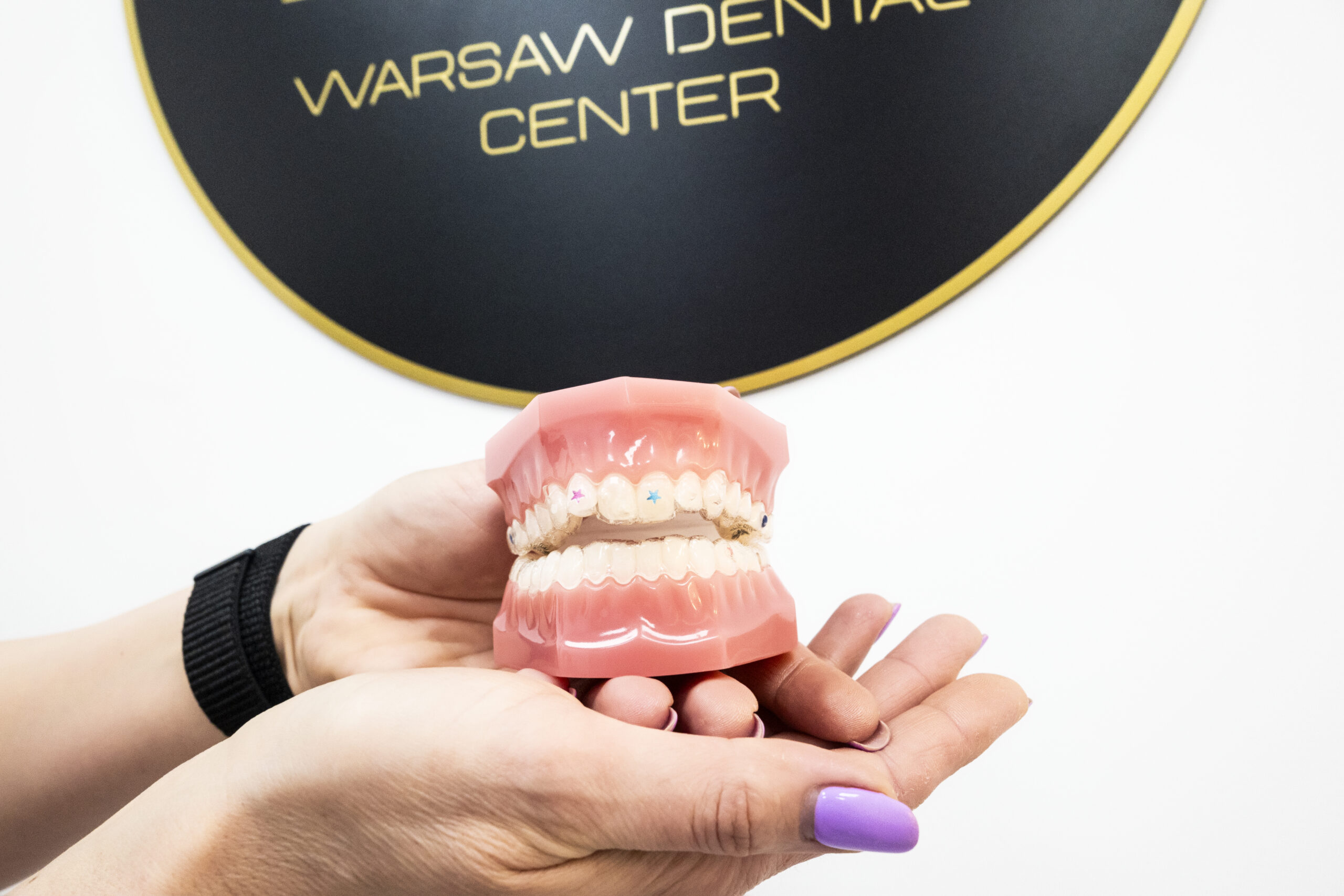
Keeping Invisalign aligners clean is crucial for oral health and comfort. Acquiring knowledge about effective use of Invisalign cleaning crystals can radically change the approach to aligner care. These crystals effectively prevent plaque buildup, ensuring a bright smile throughout the treatment period. Rinse the Aligners Before Cleaning Before cleaning the aligners, it’s essential to rinse them. This is an important step that ensures more effective removal of dirt and bacteria. Rinse them under lukewarm water, avoiding extreme temperatures that could damage the plastic. Rinsing prepares the aligners for deeper cleaning, allowing the cleaning crystals to work more effectively. Skipping this step may reduce disinfection effectiveness, as visible contaminants can interfere with the cleaning process. Prepare the Invisalign Cleaning Solution To prepare an effective cleaning solution for Invisalign aligners, follow these steps: Fill a clean, small container with lukewarm water to a level that fully submerges the aligners. Sprinkle the Invisalign cleaning crystals into the water, following the instructions regarding the amount provided on the packaging. Gently stir the solution until the crystals are completely dissolved. Ensuring full dissolution of the crystals is crucial to prevent uneven cleaning or residue left on the aligners. Use the prepared solution to thoroughly clean the Invisalign aligners. It works deeply, removing hard-to-see bacteria and eliminating any residual odors. Remember, besides maintaining cleanliness, proper preservation of the integrity and appearance of the Invisalign aligners is crucial. The special formula of the cleaning crystals is designed to be effective against bacteria while being safe for the plastic of the aligners, preserving their transparency and flawless appearance. Completely Submerge the Aligners Thoroughly immerse the aligners in the solution. Ensure they are fully covered with water. The aligners should remain in the solution for the recommended time, usually 15 to 30 minutes. This soaking time allows the cleaning crystal solution to penetrate any deposits and effectively eliminate bacteria. Full immersion ensures that every part of the aligners, including the smallest crevices and edges, is thoroughly cleaned, reducing the risk of bacteria accumulation in hard-to-reach areas. After soaking, remove the aligners from the solution and rinse them thoroughly with lukewarm water to remove any remaining cleaning solution residue. This step is crucial to ensure that no traces of cleaning agents remain on the aligners before placing them back in the mouth. Proper rinsing after soaking contributes to maintaining a fresh, clean taste and overall oral health. Soak for the Recommended Time Submerging the aligners in the cleaning solution is just the beginning, but soaking them for the appropriate amount of time yields real results. Typically, it’s recommended to keep them in the solution for 15 to 30 minutes—shorter periods may not suffice for thorough cleaning, while longer ones are usually unnecessary. During this process, the cleaning crystals do their job, reaching every nook and cranny of the aligners, ensuring comprehensive cleaning. Although the wait may seem long, remember it’s a small investment of time for achieving a fresh and hygienic outcome. The soaking phase also presents an excellent opportunity to brush and floss your natural teeth, optimizing daily oral care. While your aligners are soaking, taking care of your natural teeth is an ideal way to maximize waiting time. Once the aligners have spent the recommended time in the solution, your entire oral cavity will be ready for the freshness and cleanliness that only thoroughly cleaned aligners can provide. Gently Stir if Necessary If you notice residue on the aligners after soaking, don’t panic. A gentle shake or tap on the side of the container can remove any remaining residue. Light stirring may help the solution better perform its task without damaging the aligners. However, remember to be gentle—the aim is to facilitate the cleaning process, not to handle the aligners roughly. Sometimes, aligners may require a gentle toothbrush with soft bristles—strictly for the aligners, not the one you use for teeth cleaning. This can help remove stubborn plaque or buildup. Be gentle in strokes and use a toothbrush designated for this task only. Harsh bristles or vigorous brushing may scratch the aligners, making them less transparent and more noticeable during wear.
Comparison of Invisalign with traditional orthodontic braces
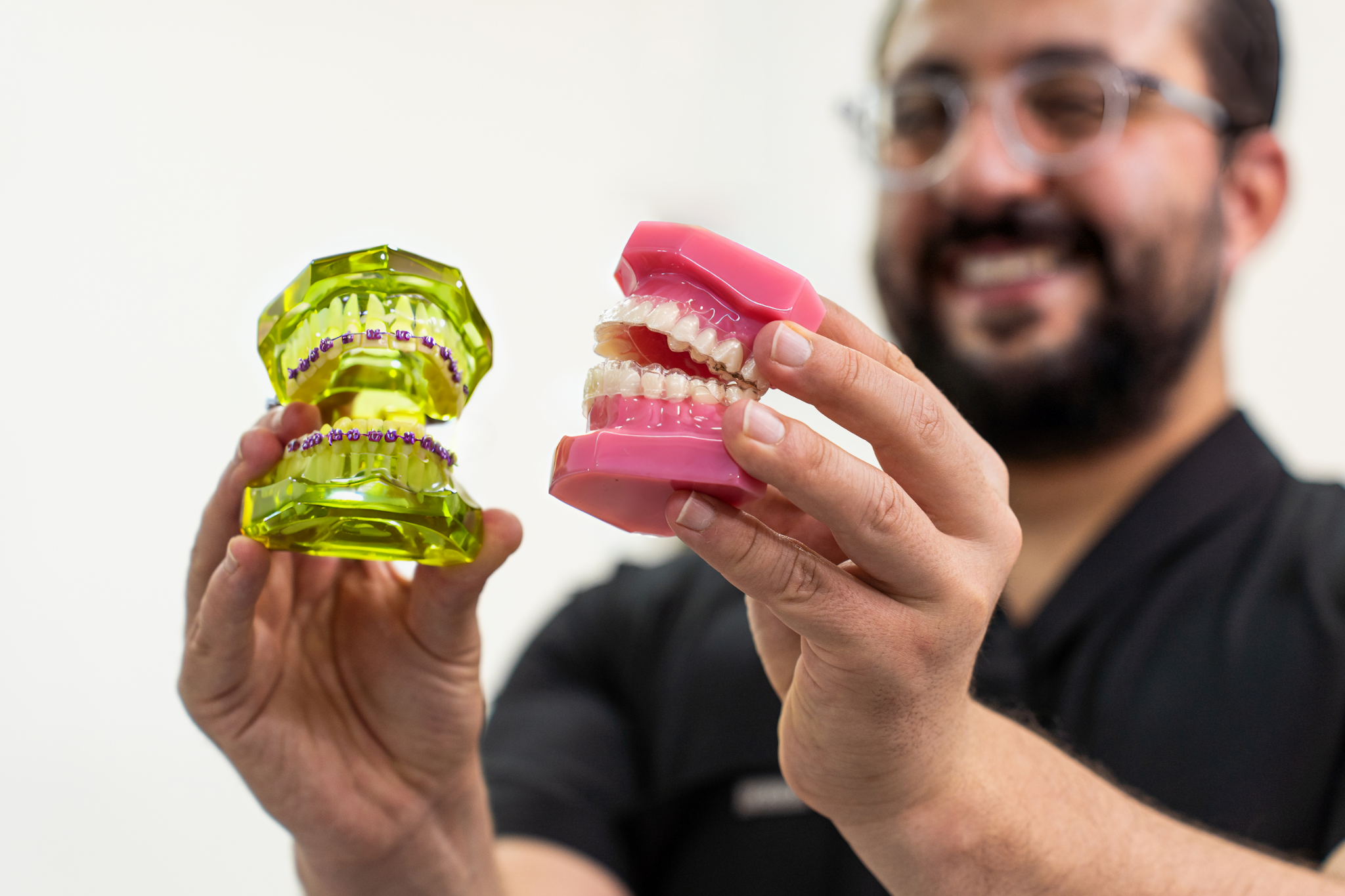
In today’s orthodontics, there are many innovative solutions that make the journey to a perfect smile and healthy teeth not only effective but also comfortable for the patient. Among the wide range of available options, both the Invisalign system and traditional orthodontic braces are particularly popular. Both methods are characterized by high effectiveness but differ in approach, treatment process, and aesthetics. At the Warsaw Dental Center in Warsaw, drawing upon rich experience and the latest research and trends in orthodontics, we offer our patients comprehensive assistance in choosing the best treatment method tailored to their needs and expectations. Our team of specialists makes every effort to ensure that each patient can enjoy not only a healthy but also a beautiful smile. Invisalign Invisalign is a method of correcting the bite using transparent, plastic aligners that are practically invisible on the teeth. Thanks to their discretion and user comfort, the Invisalign system is particularly popular among adult patients. The aligners are personalized to each patient’s individual needs and are replaced every few weeks, gradually shifting the teeth to the desired position. Additionally, the ease of removing the aligners during eating or brushing teeth is a significant advantage for oral hygiene. Traditional Orthodontic Braces Traditional orthodontic braces are a proven method of correcting the bite, used for decades even in the most complicated cases of malocclusion. They consist of metal brackets connected by archwires, which are regularly adjusted by the orthodontist to gradually shift the teeth to the correct position. Although they are more visible, traditional braces are still chosen by many patients due to their reliability and often lower treatment cost compared to the Invisalign system. Advantages and disadvantages of Invisalign Advantages: Aesthetics: Invisalign stands out with transparent aligners designed for discretion, making them practically invisible on the teeth. This feature attracts patients of all ages who value the opportunity to correct their smile without affecting their daily appearance. Comfort: The absence of sharp or protruding metal elements minimizes the risk of oral mucosa irritation and discomfort, often experienced with traditional orthodontic braces. Hygiene: Invisalign aligners can be easily removed, allowing thorough cleaning of teeth and gums. Patients can continue their standard hygiene routine without needing specialized tools for cleaning orthodontic appliances. Convenient Eating: The ability to remove the aligners gives patients the freedom to choose their food. They do not have to avoid hard, sticky, or difficult-to-bite foods, which is a significant advantage compared to dietary restrictions associated with traditional braces. Disadvantages: Cost: One of the major limitations of Invisalign is its price, which usually exceeds the cost of traditional orthodontic braces. Higher costs often stem from advanced technology and personalized treatment plans. Discipline: The success of Invisalign treatment largely depends on the patient’s self-discipline. The aligners must be worn for at least 22 hours a day for the treatment to be effective. Failure to adhere to this rule may lead to prolonged treatment time or unsatisfactory results. Therapeutic Limitations: Although Invisalign is effective in many cases, in some complex orthodontic situations, it may not provide sufficient force or precision for correction. In such cases, traditional orthodontic braces may be more suitable for achieving therapeutic goals. Advantages and disadvantages of traditional orthodontic braces Advantages Effectiveness: Metal braces are considered one of the most effective methods of correcting the bite, capable of treating a wide range of orthodontic problems. They are particularly recommended for cases requiring significant tooth movements or correction of complex malocclusions. Cost: Traditional orthodontic braces are often more affordable compared to modern methods like Invisalign. Their lower price makes them accessible to a wider range of patients, making them an attractive option for those with limited budgets. Independence from Patient Discipline: Since traditional braces are non-removable, the success of treatment does not depend on the patient’s daily discipline in wearing the device. This ensures the continuity of the bite correction process without the risk of treatment delays caused by the patient. Disadvantages Aesthetics: One of the biggest challenges for patients opting for traditional braces is their visibility. Metal elements are much more noticeable than transparent aligners, which may affect the confidence of some patients. Comfort: Metal wires and brackets can cause discomfort and irritation of the oral mucosa, especially in the first weeks after the braces are applied. This may require the patient to adapt and use special orthodontic waxes. Compromised Hygiene: Maintaining proper oral hygiene with braces requires additional effort from patients. Metal braces make it difficult to clean teeth and gums thoroughly, increasing the risk of cavities and gum diseases. The choice between the Invisalign system and traditional orthodontic braces depends on various factors such as the complexity of the case, aesthetic expectations, lifestyle, and the patient’s budget. At the Warsaw Dental Center in Warsaw, we ensure that our patients are supported at every stage of this choice and have access to the latest achievements in orthodontics to help them achieve their dream smile. Our team of specialists not only advises but also provides full support and care to ensure that the orthodontic process proceeds smoothly and effectively, yielding excellent results.
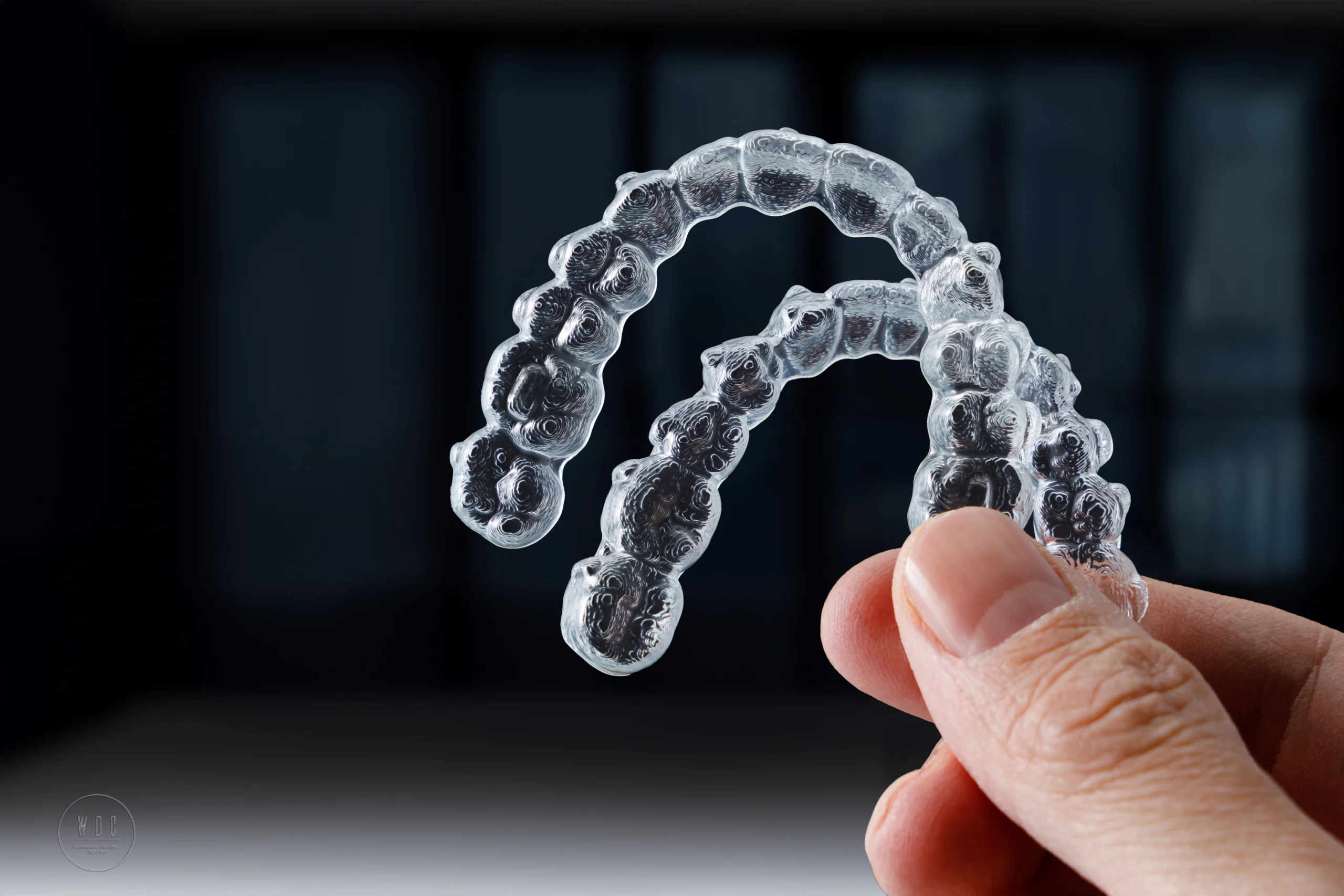
Invisalign overlays – Warsaw price
Invisalign overlays – Cost of treatment Before answering the question about the costs of treatment with Invisalign overlays in Warsaw, it is worth emphasizing that this is currently the most modern method of correcting the bite, while eliminating the need to use traditional fixed braces. Why is it worth choosing this type of orthodontic treatment? Everything is described in the article “Invisalign“. The price of this solution is currently PLN 20,000. It is worth noting that this price is usually set at a fixed level and does not change during the treatment process. Even if a minor correction is necessary after treatment, it is included in the package price. Additionally, the process of creating subsequent overlays using 3D printing technology does not generate additional costs for the patient. Costs related to preparation for the installation of orthodontic appliances Preparation to start orthodontic treatment requires that all teeth be cured and that there are no contraindications to continuing the therapy. This process begins with a consultation visit, the cost of which at the Warsaw Dental Center is approximately PLN 300. During this visit, the orthodontist uses a 3D scanner to obtain a precise image of the teeth. Then the patient is sent for panoramic and cephalometric X-rays, the cost of which ranges from PLN 170 to PLN 400. After collecting comprehensive medical documentation, the orthodontist begins a cephalometric analysis. Based on the data obtained, such as X-rays, 3D scans and cephalometric analysis, a treatment plan is created. The treatment plan costs PLN 300. Thanks to this, the patient can be sure that he or she receives comprehensive orthodontic care, including the therapy planning stage. What imperfections can Invisalign overlays correct? Invisalign is an effective method of treating many orthodontic defects, such as: Crossbite Gaps Open bite Undershot Deep bite Treatment plan using Invisalign aligners The next visit includes visualization of the final simulation of the therapy progress during the next visit. The simulation is presented as a dynamic 3D animation showing the correction of malocclusion. After accepting this plan, the patient pays the first installment of PLN 10,000 or the entire amount of treatment. Based on this transaction, the overlay production process is commissioned. Cost of Installing Orthodontic Braces with Invisalign Aligners It is worth noting that the patient is informed about the total cost of treatment at the beginning, and this amount does not change even in the case of complicated orthodontic defects or a long-term treatment process. At Warsaw Dental Center, the total cost of overlay treatment is PLN 20,000 (additionally + PLN 600 for permanent retention after the treatment is completed), which is slightly different from the final cost estimate of other orthodontic options. Cost of follow-up and intermediate orthodontic visits If the patient pays the full cost of treatment, he or she does not incur additional fees for subsequent follow-up visits or consultations with the orthodontist. However, if the patient only paid an entry fee of PLN 10,000, the remaining amount is divided into installments, payable during subsequent follow-up visits. Summary of the cost of Invisalign treatment – Consultation visit: PLN 300 – 3D photo scan: PLN 300-500 – 3D radiological scan: PLN 400 – X-rays, cephalometry + treatment plan: PLN 170 – PLN 300 – Panoramic photo: PLN 170 – Total cost of overlays: PLN 20,000 – Retention cost retention plates: PLN 700 fixed: PLN 600 Invisalign retention, one arch: PLN 1,500 Invisalign retention, two arches: PLN 2,500

A new orthodontist in the Warsaw Dental Center team
Orthodontics is a dental specialty that is very popular among our patients. We are happy to announce the expansion of our team of orthodontists at Warsaw Dental Center with a new specialist! We would like to introduce you to Dr. Agata Piechal-Morawska, who recently joined our team. In 2012, Dr. Piechal-Morawska graduated in medicine and dentistry from the Medical University of Warsaw. He constantly develops his skills by participating in specialized courses and congresses in Poland and abroad. Among many training courses, she took part in the renowned Progressive Orthodontics Course, focusing on the latest methods in orthodontics. He is also a certified doctor using Invisalign. He is a smiling person, full of empathy and understanding for patients. In his free time, he devotes himself to reading fantasy books and cinema. A lover of exotic travels. We cordially invite you to make an appointment with Dr. Agata Piechal-Morawska at Warsaw Dental Center! To make an appointment: – by phone at: 22 542 18 04 – by e-mail: kontakt@warsawdentalcenter.pl – or via our social media profiles We are waiting for you at Topiel 11 in the capital!
Invisalign – why is it worth choosing this type of orthodontic treatment?
What is Invisalign? Invisalign is a modern method of correcting bite issues and straightening teeth using transparent, nearly invisible dental aligners known as aligners. It serves as an alternative to traditional orthodontic braces made of metal or ceramic. Invisalign is especially popular among adults and older teenagers seeking a less noticeable orthodontic treatment option. However, not every orthodontic case can be treated with this method, making a consultation with a specialist crucial to determine if Invisalign is suitable for a specific patient. Is Invisalign Effective? Invisalign is considered an effective method for straightening teeth, utilizing a system of clear plastic aligners tailored to fit the changing bite of the user. These aligners, favored by adults and teenagers alike, allow for the straightening of smiles without the need for traditional metal and wire braces. It’s important to note, however, that Invisalign is most effective when worn 20 to 22 hours per day and may not be suitable for all orthodontic cases, particularly more complex ones. A high level of patient commitment is required since positive outcomes are not guaranteed if the aligners are worn inconsistently. Fixed Braces or Invisalign? What are the Differences? The primary differences between traditional braces and the Invisalign system lie in their appearance, treatment method, comfort, and impact on daily life. Here is a detailed comparison: 1. Appearance: – Traditional Braces: Made of metal brackets attached to each tooth, connected by wires, and may include elastic elements like rubber bands. While more visible, modern braces can be less noticeable than older versions, with options for ceramic or colored braces that are more aesthetically pleasing. – Invisalign: This system uses a series of clear, plastic aligners that are virtually invisible when worn. The aligners are custom-made to fit the teeth and gradually move them to the desired position. 2. Treatment Method: – Traditional Braces: Brackets and wires apply continuous pressure on the teeth to slowly move them into the correct position over time. Adjustments are made by the orthodontist during regular visits, typically every 4-6 weeks. – Invisalign: Treatment consists of a series of aligners worn for about two weeks each before moving on to the next set in the series. Each aligner is slightly different, gradually moving the teeth to their final position. 3. Comfort: – Traditional Braces: Wires and brackets can sometimes cause irritation inside the mouth, and adjustments may result in some discomfort. – Invisalign: Aligners are made from smooth plastic and are generally considered more comfortable than traditional braces. However, some discomfort is still possible as teeth move. 4. Impact on Lifestyle: – Traditional Braces: Dietary restrictions are necessary to avoid damaging the braces. Hard, sticky, and chewy foods are typically prohibited. Oral hygiene can be more challenging, requiring more time and care to clean around brackets and wires. – Invisalign: Aligners are removable, so there are no dietary restrictions, and maintaining oral hygiene is as easy as removing the aligners to eat, brush, and floss. However, aligners must be worn 20-22 hours a day to be effective, requiring discipline. 5. Treatment Time: – The duration of treatment can vary significantly depending on the individual case and the complexity of dental issues. Generally, traditional braces are worn for about 18 months to 3 years, while Invisalign treatment can last from 6 to 18 months, though this can vary greatly. 6. Cost: – The cost of both treatments can vary significantly based on the complexity of the case, geographic location, and specifics of the treatment plan. Generally, Invisalign may be more expensive than traditional braces, but this is not always the case, and insurance may cover some of the costs of either treatment. 7. Suitability: – Traditional Braces: Can treat a wide range of orthodontic issues, including more complex cases. – Invisalign: Best suited for mild to moderate dental problems. Not all cases are suitable for Invisalign treatment, especially more complex orthodontic issues. How Does Invisalign Treatment Work? Consultation: The process begins with a consultation with a dentist or an orthodontist trained in Invisalign, who assesses your smile and determines if Invisalign is the right treatment for you. Personalized Treatment Plan: Using 3D computer imaging technology, the dentist creates a precise treatment plan, from the initial position of your teeth to the desired final position. Invisible Aligners: Based on the treatment plan, a series of personalized aligners are produced specifically for your teeth. Each aligner is worn for about two weeks before moving on to the next in the series, gradually moving the teeth towards the anticipated final position. Regular Check-ups: You will have occasional check-ups, usually every 6 weeks, to monitor progress and receive new aligners. How to Care for Aligners at Home? 1. Regular Cleaning: Aligners should be cleaned regularly using a soft toothbrush and water. Avoid using hot water as it can warp the aligners. 2. Proper Storage: When not in use, aligners should be stored in their protective case to avoid damage or loss. 3. Avoid Certain Foods and Drinks: While aligners are removed for eating and drinking, it’s important to avoid certain foods and drinks that can stain or damage the aligners, such as coffee, red wine, and hard or chewy foods. 4. Oral Hygiene: Maintain good oral hygiene by brushing and flossing teeth before reinserting the aligners to prevent trapping food particles or bacteria. Pros and Cons of Invisalign Pros: – Aesthetically pleasing due to its near invisibility – Removable, allowing for easier eating and oral hygiene – Generally considered more comfortable than traditional braces – No dietary restrictions Cons: – May be more expensive than traditional braces – Requires discipline to wear the aligners the recommended 20-22 hours per day – Not suitable for all orthodontic cases, particularly complex ones – Can be lost or damaged due to their removable nature In conclusion, Invisalign offers a discreet and effective option for those looking to straighten their teeth without the appearance of traditional braces. However, its suitability depends on individual cases, and a consultation with a dental professional