

Modern dentistry today is far more than treating tooth pain or improving the appearance of a smile. In 2026, the focus has clearly shifted toward precision, predictability, and patient comfort, rather than the procedure alone. As a dentist and Medical Director of Warsaw Dental Center, I observe how significantly patients’ needs and expectations have evolved, especially in large cities such as Warsaw. Patients are looking for treatment that is not only effective, but also calm, well planned, and tailored to their lifestyle. So what truly has the greatest impact on the quality of dental care today? 🔬 Precise Diagnostics Instead of Guesswork One of the most important changes in recent years is the approach to diagnostics. In modern dentistry, treatment begins long before a tooth is touched. CBCT scans, digital imaging, intraoral scanners, and photographic documentation allow for a precise assessment of the clinical situation and treatment planning without surprises. For patients, this means: greater safety, fewer complications, a more predictable final outcome. 🔍 Dental Microscope as a Standard, Not a Luxury Just a few years ago, a dental microscope was considered specialist equipment. Today, in endodontics, surgery, and precise restorative dentistry, it has become a standard of modern dental care. Working under magnification allows dentists to: preserve more healthy tissue, clean root canals more accurately, improve the durability of treatment, reduce the risk of repeat procedures. This is a real improvement in quality that patients increasingly notice and appreciate. 🧠 Planned Treatment Instead of “Immediate Fixes” Contemporary dentistry is moving away from the “here and now” approach toward comprehensive treatment planning. More and more often, patients do not come in with just one problem, but with the goal of organizing their oral health for years to come. A treatment plan takes into account: the health of teeth and gums, bite function, smile aesthetics, a treatment pace adapted to the patient. This approach avoids chaos and gives patients a sense of control and peace of mind. 🦷 Patient Comfort Comes First A modern dental clinic is not only about technology, but also about atmosphere and the relationship with the patient. In 2026, dental treatment should be: painless, clearly explained, carried out at a calm, comfortable pace. We place increasing importance on communication, empathy, and understanding patients’ concerns. This is especially important for those who have avoided dental visits for years due to fear or negative past experiences. ⏱ Treatment Adapted to Life in a Big City Warsaw is a city with a fast-paced lifestyle. Patients expect solutions that save time without compromising treatment quality. Modern technologies now make it possible to: reduce the number of visits, combine treatment stages, plan appointments with precision. As a result, dental care no longer conflicts with work, travel, or everyday responsibilities. 🏥 What Defines a Modern Dental Clinic? In 2026, a modern dental clinic is a place where: doctors work as a team in an interdisciplinary way, decisions are based on diagnostics, not haste, the patient is a partner in the treatment process, quality and ethics matter more than quick results. This approach builds long-term trust and a genuine sense of safety. Conclusion Modern dentistry in Warsaw today is a combination of technology, knowledge, and empathy. It is treatment that is carefully planned, precise, and focused on the person, not just the tooth. In 2026, the greatest change is not a single device or method, but a holistic approach to patient care. If you are looking for dental care that combines modern solutions with an individual approach, it is worth paying attention to how a clinic plans treatment, communicates with patients, and takes care of details. With care for our patients’ health,Medical Director, Dentist, MSc Urszula LeończakWarsaw Dental Center
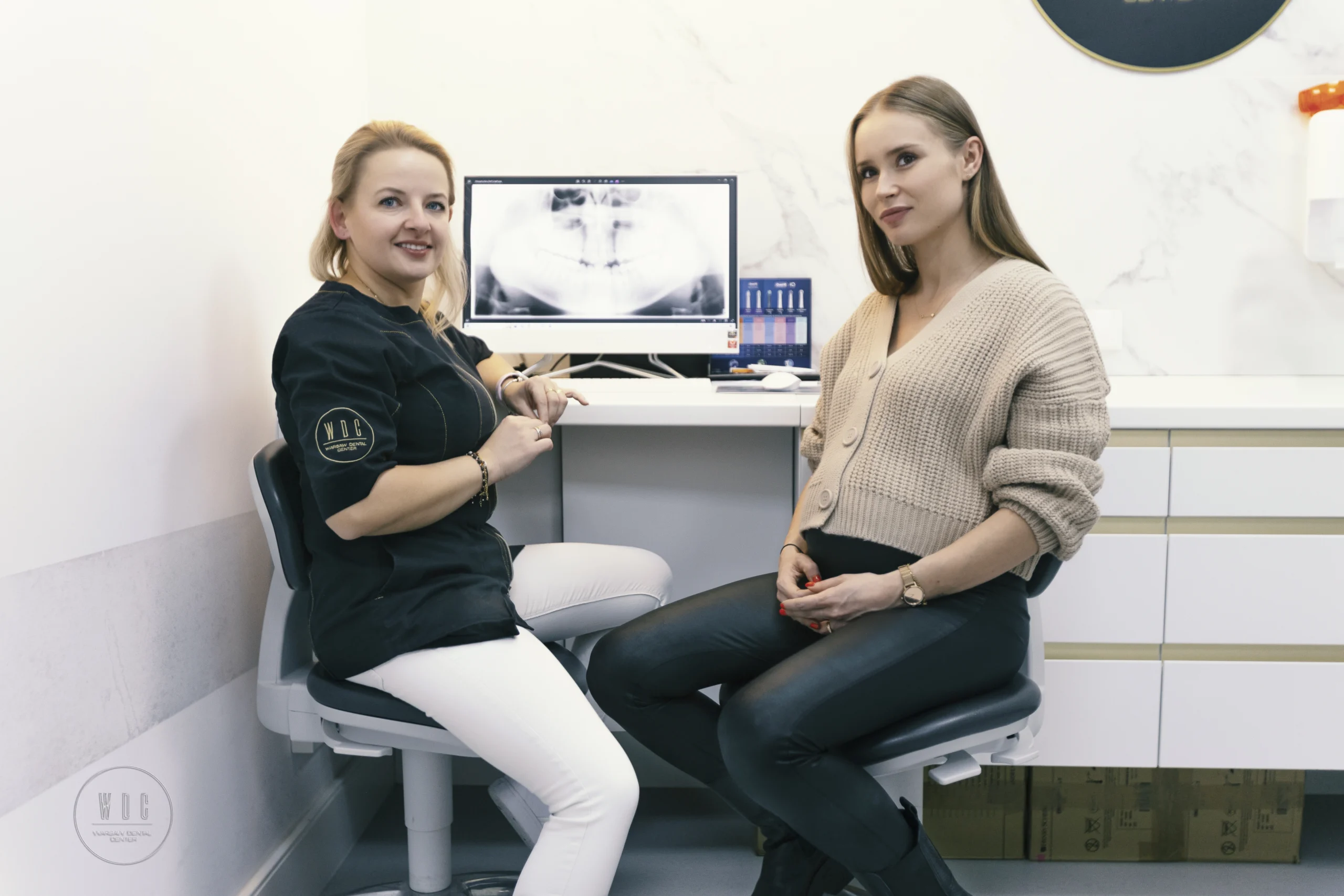
Panoramic photo of teeth – effective dental diagnostics
Dentist Aleksandra Kostrz discusses treatment with the patient about dental x-rays. Although an experienced dentist can detect many abnormalities using his eyes, he cannot see all the details. Therefore, to obtain greater certainty, it is recommended to perform a dental pantomography. This short and effective test allows you to detect even the smallest abnormalities, including the presence of cancer. Dental panoramic radiograph – for whom? A panoramic radiograph is a basic diagnostic test that is an important element of the patient’s medical documentation. Its aim is to quickly assess the condition of the teeth, periodontium, jaw bones, mandible, maxillary sinuses and temporal joints. They are performed using a device known as a pantomograph. This test detects diseases and problems invisible to the naked eye, such as: initial caries, impacted teeth, e.g. wisdom teeth, irregularities resulting from root canal treatment, cancer, cysts. A dental panoramic radiograph is also extremely useful in planning prosthetic treatment, such as dentures, crowns or bridges. Before starting orthodontic treatment, it is recommended to perform a panoramic radiograph, especially if the patient has unerupted wisdom teeth, which allows for appropriate preparation for their possible surgical removal. The course of the procedure of taking a panoramic X-ray The dental pantomography procedure takes several seconds and takes place in a separate room to prevent radiation from escaping. The patient is covered with a lead blanket, which, combined with a low dose of radiation, guarantees a high level of safety. No special preparations are required, such as the need to come on an empty stomach. Only movable elements, e.g. earrings, should be removed to avoid marks on the photo. The entire procedure is painless. During pantomography, the radiation-generating head moves simultaneously with the recorder, which allows obtaining a precise image of a specific part of the facial skeleton. The resulting image is then enlarged by approximately 15%.

Warsaw Dental Center dental clinic – Diagnostic equipment
Dentist Urszula Leończak explaining the condition of the patient’s teeth based on a panoramic radiograph. A visit to a dental clinic offers much greater opportunities than in a regular or smaller dental office. At Warsaw Dental Center, we give patients access to very advanced diagnostic technologies, top-class devices and precise equipment that very few dental clinics in Warsaw have. What sets us apart is the ability to test the face bow. This is a very specialized diagnostic test that is performed before comprehensive treatment begins. Why is facial bow examination so important – because this examination shows the spatial relationship of the teeth to the elements of the skull and temporomandibular joints. It is worth mentioning that the equipment available in our clinic meets the highest technical standards and is operated by trained staff. The accuracy of the equipment has been confirmed by numerous certificates. Detailed information about devices and equipment used in diagnosis and treatment can be found in the tabs of individual specializations: prosthetics, implantology, dental surgery, periodontology, endodontics, aesthetic dentistry, orthodontics, orthognathics.