

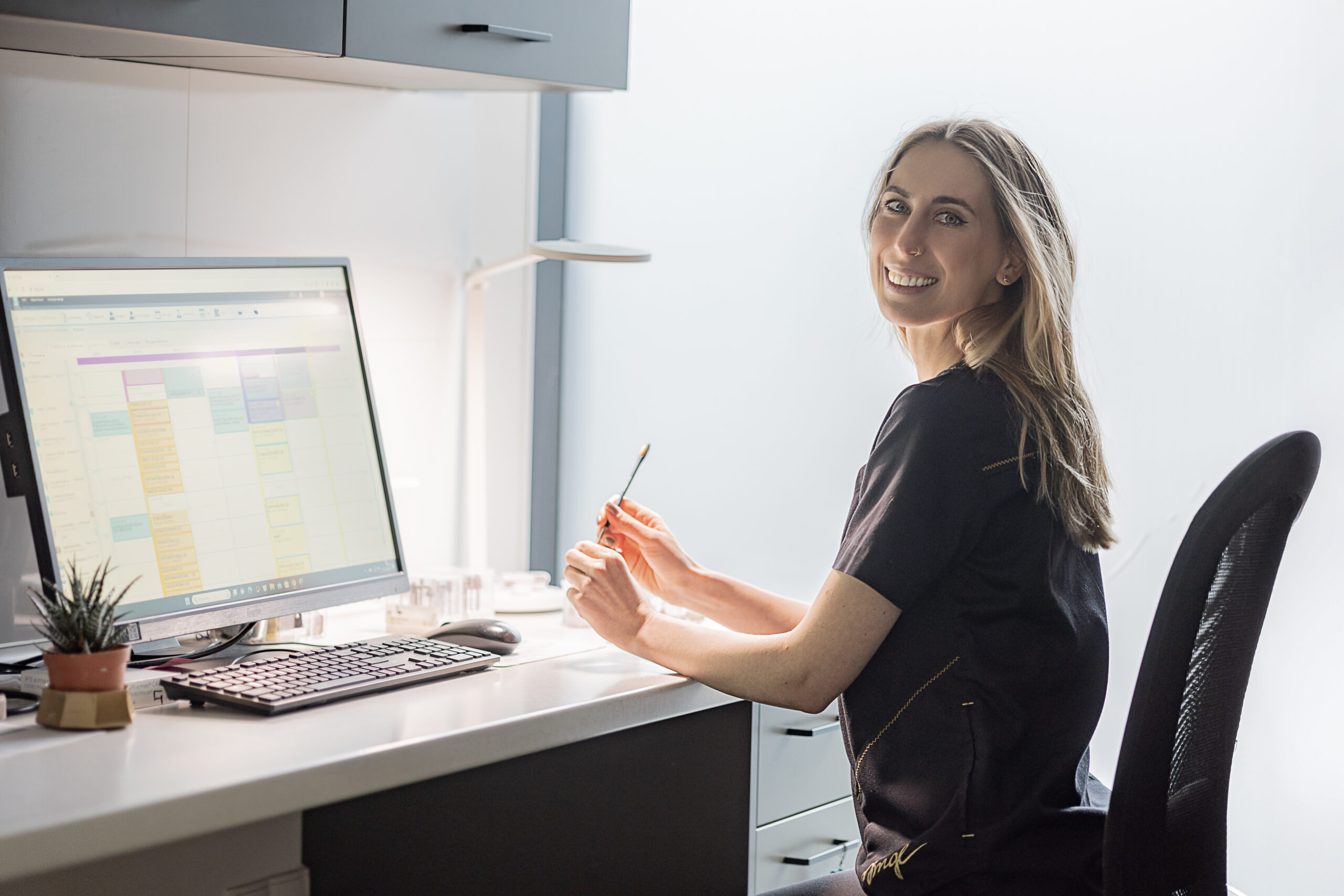
An In-House Prosthetic Laboratory A Fusion of Dentistry and Art You Can Truly Feel as a Patient In the world of dentistry, most clinics must send prosthetic work to external laboratories, often located hundreds of kilometers away. This means longer waiting times, more intermediaries, and less control over the final outcome. Warsaw Dental Center operates differently. We belong to a unique group of clinics that have their own on-site prosthetic laboratory. This is not just a technical addition it is a rare integration of the dentist’s office and the technician’s workshop, one that significantly elevates the standard of care. A Faster Path to a Beautiful Smile The Advantage of an On-Site Prosthetic Laboratory The most noticeable difference for patients is time.When restorations are created on-site, there is no need to ship impressions, models, or scans to another city and wait for them to return. What normally takes weeks in a standard clinic can often be completed at Warsaw Dental Center in just a few days, and in selected cases even the same day. This is especially important in treatments involving crowns, veneers, and bridges. During a fitting, if any adjustment is needed, the technician simply steps into the treatment room, evaluates the situation, and takes the work to the laboratory sometimes for just a few minutes. Instead of scheduling another visit, we perform corrections immediately, saving you time and reducing the total number of appointments to the minimum. Eliminating courier shipments shortens waiting time from weeks to days, and for minor adjustments even to hours. The entire process becomes more predictable: no shipping delays, no color-matching errors, no need to repeat impressions. Everything happens within one integrated team that knows your medical history and ensures continuity of your treatment. Real-Time Smile Individualization To make a crown, bridge, or veneer look truly natural, high-quality material alone is not enough.Crucial elements include: shade, color transitions, enamel translucency, shape harmonized with your face, lips, and neighboring teeth. In a clinic with an on-site laboratory such as Warsaw Dental Center, the dental technician can assess all of this directly at the chair looking at you, not only at a plaster model. The technician can meet you in person to perfectly match the shade and shape of your restorations. During the visit, they can take additional photos, perform shade tests, and make delicate shape corrections on the spot. If you notice during a fitting that one tooth could be slightly shorter or the shade a bit warmer, you communicate it immediately and the technician makes the adjustment the same day. This approach blends dentistry with an artistic sense of aesthetics. We do not create “just a crown” we create an individualized restoration designed to harmonize with your smile and personality. Thanks to this, veneers, crowns, and bridges do not look like “foreign elements” but like a natural part of your smile. Full Quality Control On-Site, Whenever You Need It Having an in-house prosthetic laboratory means we take responsibility for every stage of the restoration process. At Warsaw Dental Center, the dentist and the technician can discuss your case in real time, review solutions, and jointly decide on materials and technologies. Instead of slow communication with an external lab, everything happens instantly. We have full control over the materials used we know exactly which ceramics and composites we work with and select them for each specific clinical situation, not according to a generic protocol. This translates into durability, comfort, and predictable long-term outcomes. Quality control is not a slogan it is our daily practice, from the initial scan, through design and fabrication, to cementation of the final work. In clinics without an in-house laboratory, part of the responsibility for the final result lies with an external technician. With us, the entire process remains within one cohesive team. It requires investment in equipment, technology, and highly trained staff, but it gives real, measurable benefits for patients: better fit, fewer corrections, and the comfort of knowing that the same team oversees your smile from start to finish. Less Stress, More Comfort For patients, the most important factors are safety and predictability. Knowing that the entire prosthetic facility is on-site means you can count on quick assistance in emergency situations for example, when a crown chips or a bridge becomes loose. Instead of waiting for a repair from an external lab, we can take care of it almost immediately. Shorter periods of wearing temporary crowns mean greater comfort at work, in social situations, and during meals. Your life does not have to revolve around appointment calendars and delivery schedules. Most adjustments can be planned and performed in a way that minimally disrupts your day. An in-house prosthetic laboratory is much more than a technical convenience. It represents a specific philosophy of care based on close collaboration between dentist and technician, individualized treatment, and full control over every stage of the process. Thanks to this, we can honestly say that at Warsaw Dental Center we combine on-site quality control, personalized aesthetics, and faster results all under one roof, in your dental clinic. Summary Choosing a clinic with its own prosthetic laboratory means choosing not only a beautiful final result, but also shorter treatment time, fewer visits, and greater influence over the appearance of your smile. It is a fusion of dentistry and prosthetic artistry, where the entire journey from planning to the final restoration happens under one roof, within one experienced team, for your comfort. Your dream restoration. Created and delivered faster.

Differences Between Tooth Bonding and Porcelain Veneers : what you should know.
Many people wonder what the difference is between tooth bonding and porcelain veneers. Both procedures are popular in cosmetic dentistry and help improve the appearance of a smile, but they differ in terms of materials, durability, and cost. In this article, we will answer the most frequently asked questions about tooth bonding and porcelain veneers to help you choose the best solution for your needs. What is tooth bonding and porcelain veneers? Tooth bonding is a procedure in which a composite resin material is applied to the tooth’s surface, shaped by the dentist to cover imperfections such as cracks, discolorations, or unevenness. Bonding is ideal for minor aesthetic corrections and repairing small tooth damage. Porcelain veneers are thin shells made of porcelain that are bonded to the front surface of the tooth. Veneers are used to significantly improve the shape, color, and appearance of teeth. They are a more advanced option than bonding and are intended for long-lasting aesthetic changes. What are the differences in durability between bonding and veneers? Durability is one of the key aspects that distinguish tooth bonding from porcelain veneers: – Tooth bonding: Bonding lasts between 3 to 10 years, depending on oral care and the patient’s habits. Composite material is less resistant to stains and damage than porcelain, which may require more frequent repairs or adjustments. – Porcelain veneers: Porcelain veneers are much more durable, often lasting between 10 to 20 years. Porcelain is more resistant to stains and damage, making veneers a long-term investment in a beautiful smile. What is the difference in the procedure for bonding and veneers? Tooth bonding is a quick and painless procedure that can be completed in a single visit to the dentist. The dentist prepares the tooth, applies the composite material, and then sculpts and hardens it with UV light. The entire procedure takes about 30 to 60 minutes per tooth. Porcelain veneers usually require two or more visits. In the first visit, the dentist removes a small amount of enamel from the tooth surface, then takes an impression, which is sent to a laboratory. During the second visit, the finished veneers are bonded to the teeth. This process is more time-consuming and requires greater precision. Which procedure is more aesthetic? In terms of aesthetics, porcelain veneers are generally considered more advanced: – Tooth bonding: Composite material mimics the natural color of teeth well but may discolor over time, especially in individuals who consume coffee, tea, or smoke. – Porcelain veneers: Porcelain is known for its excellent replication of the natural tooth structure and is resistant to staining. As a result, the smile looks natural and fresh for a longer time. What is the price difference between tooth bonding and porcelain veneers? The cost of tooth bonding is significantly lower than porcelain veneers, making bonding a more affordable option for patients looking for quick and economical cosmetic solutions. – Tooth bonding: The cost of the procedure ranges from 300 to 800 PLN per tooth, depending on the clinic and materials used. – Porcelain veneers: Porcelain veneers typically cost between 1,500 to 2,500 PLN per tooth. The higher price is due to the durability and aesthetic quality that porcelain provides. When should you choose bonding and when porcelain veneers? Tooth bonding is a good option if you need a quick, less invasive repair of minor cosmetic defects. It’s ideal if you want to: – Correct small imperfections – Remove discolorations – Change the shape or length of your teeth Porcelain veneers are a better choice if you are looking for a long-lasting, more aesthetic, and damage-resistant solution. Veneers are recommended when: – Teeth require significant corrections in shape or color – You want a long-term, aesthetic solution – You need excellent resistance to stains Conclusion Choosing between tooth bonding and porcelain veneers depends on your needs, budget, and expectations regarding durability and aesthetics. Tooth bonding is quicker, cheaper, and less invasive, ideal for minor corrections. Porcelain veneers are a long-term investment, providing a lasting and aesthetic result. It’s worth consulting with a dentist who will help you choose the right solution. Source: www.forbes.com www.sciencedirect.com
Dental Veneers: Transform Your Smile with a Beautiful, Natural Look
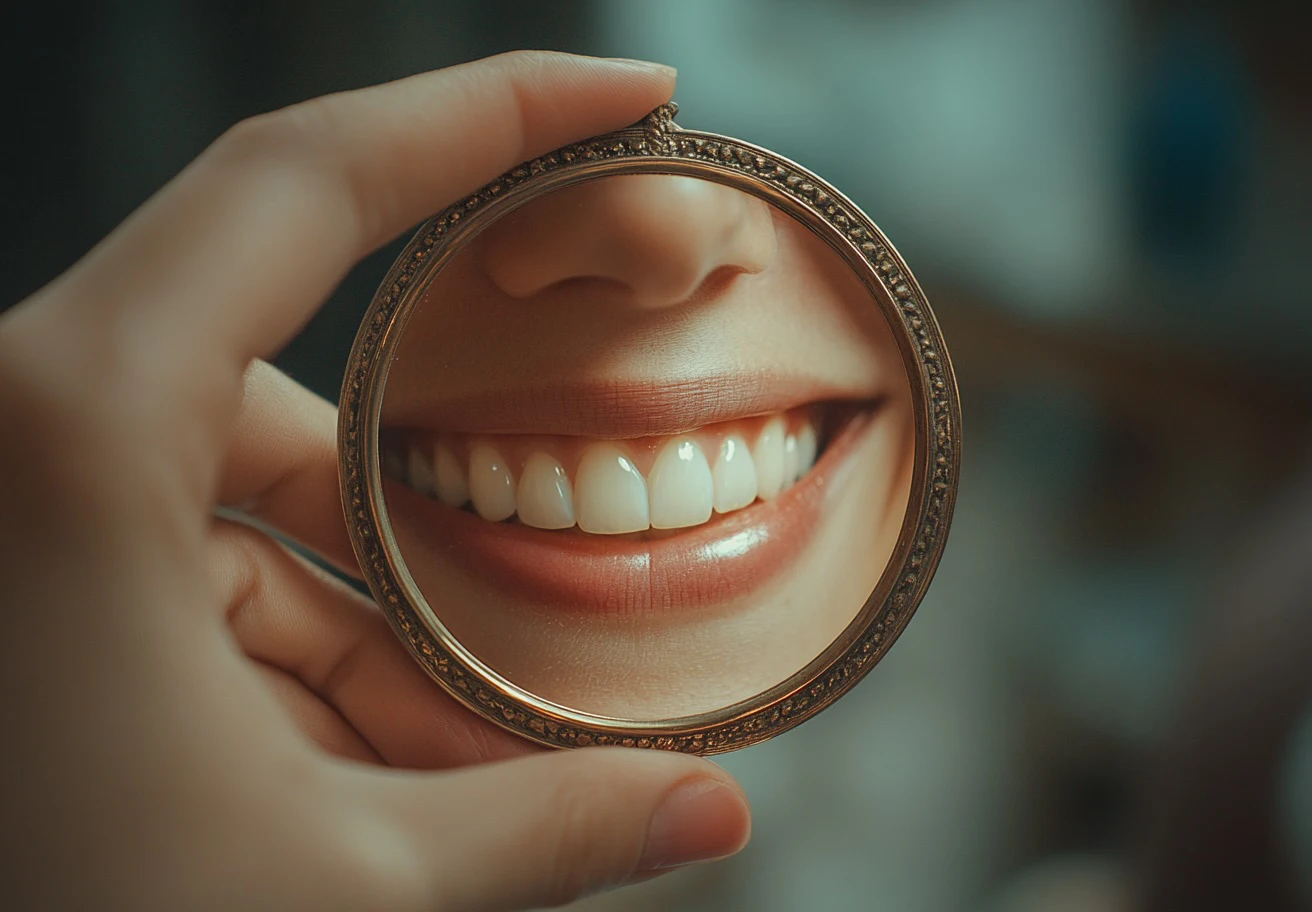
Dental veneers are a popular cosmetic dentistry solution that can dramatically improve the appearance of your smile. These thin, custom-made shells of tooth-colored materials are designed to cover the front surface of teeth, enhancing their color, shape, size, or length. If you’re considering veneers to transform your smile,in this comprehensive guide, we will provide you with essential information, including benefits, procedures, costs, and frequently asked questions. What Are Dental Veneers? Dental veneers are ultra-thin, custom-made shells of tooth-colored materials designed to cover the front surface of teeth to improve their appearance. They are permanently bonded to the teeth, creating a natural, attractive look. Veneers can be made from porcelain or composite resin materials, with porcelain being the most popular choice due to its durability and natural appearance. Types of Dental Veneers There are two main types of dental veneers: 1. Porcelain Veneers: These are more durable, stain-resistant, and natural-looking. They typically last longer than composite veneers. 2. Composite Resin Veneers: These are less expensive and can be applied in a single visit. However, they may not last as long as porcelain veneers and are more prone to staining. Benefits of Dental Veneers Dental veneers offer numerous benefits, making them an attractive option for many patients: 1. Improved Aesthetics: Veneers can dramatically enhance your smile by correcting issues such as discoloration, chips, cracks, or gaps. 2. Minimally Invasive: Compared to crowns, veneers require less tooth structure removal. 3. Stain Resistance: Porcelain veneers are highly resistant to staining, maintaining their bright appearance for years. 4. Customization: Veneers are custom-made to match the color and shape of your natural teeth, ensuring a seamless blend. 5. Boost in Confidence: A beautiful smile can significantly improve self-esteem and social interactions. The Dental Veneer Procedure The process of getting dental veneers typically involves several steps: 1. Consultation and Planning: Your dentist will examine your teeth and discuss your goals to determine if veneers are the best option for you. 2. Preparation: A small amount of enamel is removed from the tooth surface to accommodate the veneer. 3. Color Selection: Your dentist will help you choose the most appropriate shade for your veneers. 4. Fabrication: Custom veneers are created in a dental laboratory based on impressions of your teeth. 5. Bonding: The veneers are permanently attached to your teeth using special dental cement and light beam. Caring for Your Dental Veneers To ensure the longevity of your veneers, follow these care tips: 1. Maintain good oral hygiene by brushing twice daily and flossing regularly. 2. Avoid biting on hard objects or using your teeth as tools. 3. Wear a nightguard if you grind your teeth. 4. Schedule regular dental check-ups and cleanings. Costs of Dental Veneers The cost of dental veneers can vary depending on several factors, including the type of veneer, the number of teeth being treated, and the location of the dental practice. At Warsaw Dental Center, as of October 2024, the prices for veneers are as follows: – Porcelain veneer: 3200 PLN per tooth – Composite veneer: 1000 PLN per tooth It’s important to note that these prices are subject to change, and it’s always best to consult with the dental center directly for the most up-to-date pricing information. Dental veneers are typically considered a cosmetic procedure and may not be covered by dental insurance. However, many dental practices offer financing options to help make the treatment more affordable. When considering the cost of veneers, it’s crucial to factor in their longevity and the value they provide in terms of improved aesthetics and confidence. While the initial investment may seem significant, the long-term benefits often outweigh the costs for many patients. Frequently Asked Questions 1. How long do dental veneers last? Porcelain veneers can last 10-15 years or more with proper care, while composite veneers typically last 5-7 years. 2. Are veneers reversible? No, the process is not considered reversible because a thin layer of enamel must be removed to accommodate the veneer. 3. Will veneers make my teeth sensitive? Some patients may experience temporary sensitivity to hot and cold following the procedure, but this typically subsides within a few days. 4. Can veneers stain? Porcelain veneers are highly resistant to staining. However, the cement used to bond them can discolor over time, potentially affecting the overall appearance. 5. Are there any food restrictions with veneers? While veneers are strong, it’s advisable to avoid excessive force on them. Avoid chewing ice, hard nuts, candy apples, and popcorn kernels. Expert Insights from Warsaw Dental Center At Warsaw Dental Center, Dr. Natalia Rogulska specializes in aesthetic dentistry, including the application of dental veneers. She emphasizes the importance of a holistic approach to patient care, focusing on precision and attention to detail. Dr. Rogulska’s expertise in cosmetic dentistry ensures that patients receive top-quality care and achieve optimal results with their veneers. Dr. Aleksandra Kostrz, another expert at the center, stresses the significance of interdisciplinary planning and digital dentistry in achieving optimal results for patients considering veneers. Her approach combines advanced technology with a deep understanding of dental aesthetics to create beautiful, natural-looking smiles. The Importance of Choosing the Right Dentist When considering dental veneers, selecting the right dentist is crucial. Look for a professional with extensive experience in cosmetic dentistry and a portfolio of successful veneer cases. The dentists at Warsaw Dental Center, like Dr. Rogulska and Dr. Kostrz, have the expertise and artistic eye necessary to create stunning, natural-looking results. Preparing for Your Veneer Consultation Before your consultation, consider the following: 1. Identify your smile goals: What specific aspects of your smile do you want to improve? 2. Research veneer types: Understand the differences between porcelain and composite veneers. 3. Prepare questions: Write down any concerns or questions you have about the procedure. 4. Bring photos: If you have images of smiles you admire, bring them to your consultation. The Veneer Design Process Creating the perfect veneers involves a collaborative process between you
Veneers: an important element in comprehensive aesthetic treatment.
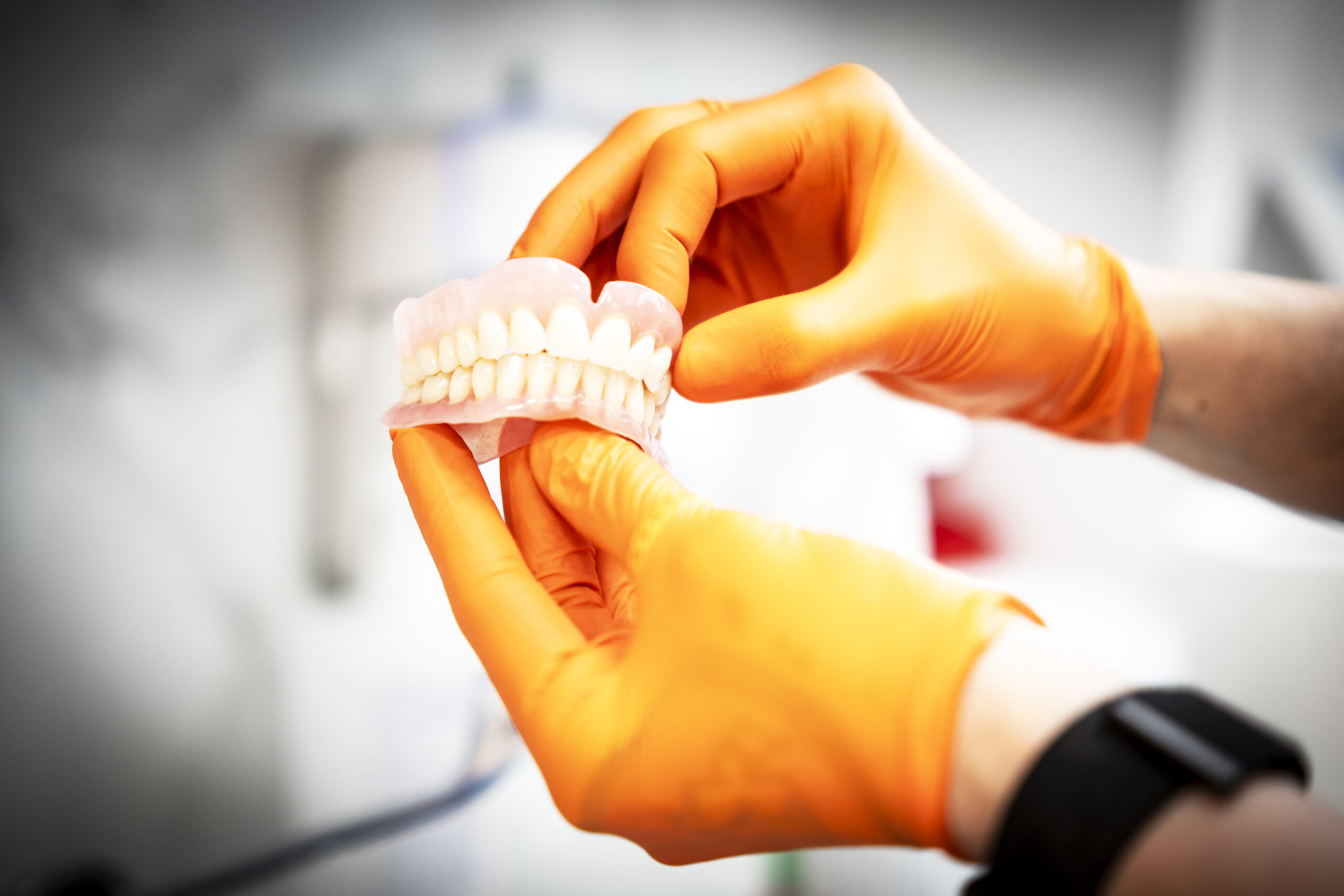
How do veneers impact smiles? Dental veneers are thin covers made of ceramic or composite material, permanently bonded to the front surfaces of teeth. Their main purpose is to enhance smile aesthetics by concealing discolorations, evening out irregularities, and modifying the shape and size of teeth. Veneers can also correct gum lines, giving teeth a more natural and harmonious appearance. Learn more about the benefits and procedures of getting veneers. Veneers in other dental procedures Veneers are an integral part of comprehensive cosmetic treatment, synergistically working with other dental procedures. Here are examples of how veneers combine with various treatments to achieve excellent results: Tooth whitening as the first step: Tooth whitening can serve as a precursor to comprehensive cosmetic treatment. Before applying veneers, it provides uniform and bright shades, which are preserved, ensuring a consistent smile appearance. Orthodontic treatment for optimal teeth alignment: Sometimes orthodontic treatment is necessary before veneer application. This improves the alignment of teeth, facilitating precise veneer fitting and achieving spectacular aesthetic results. Dental implants in a comprehensive approach: In cases of missing teeth, dental implants can be an integral part of cosmetic treatment. After their placement, veneers can be placed on the implants, restoring missing teeth and providing both aesthetics and chewing functionality. Combining veneers with other dental procedures yields optimal aesthetic results, raising the standards of comprehensive dental care. Benefits of comprehensive aesthetic treatment with veneers Achieving a consistent and harmonious smile is possible through a comprehensive approach to aesthetic treatment, where veneers play a key role. This innovative method not only enhances the appearance of teeth but also allows customization of treatments to meet individual patient needs and expectations. Combining veneers with other procedures such as tooth whitening, orthodontic treatment, or dental implants yields the best aesthetic results. Additionally, comprehensive treatment can be more cost-effective and time-efficient, enabling the execution of various procedures simultaneously or within one treatment plan. Summary of the role of veneers in comprehensive aesthetic treatment Dental veneers are a crucial component of a comprehensive approach to enhancing smile aesthetics. Their versatile application combined with other procedures contributes to achieving excellent aesthetic outcomes. With veneers, patients can regain a beautiful, healthy smile, positively impacting their confidence and quality of life.