


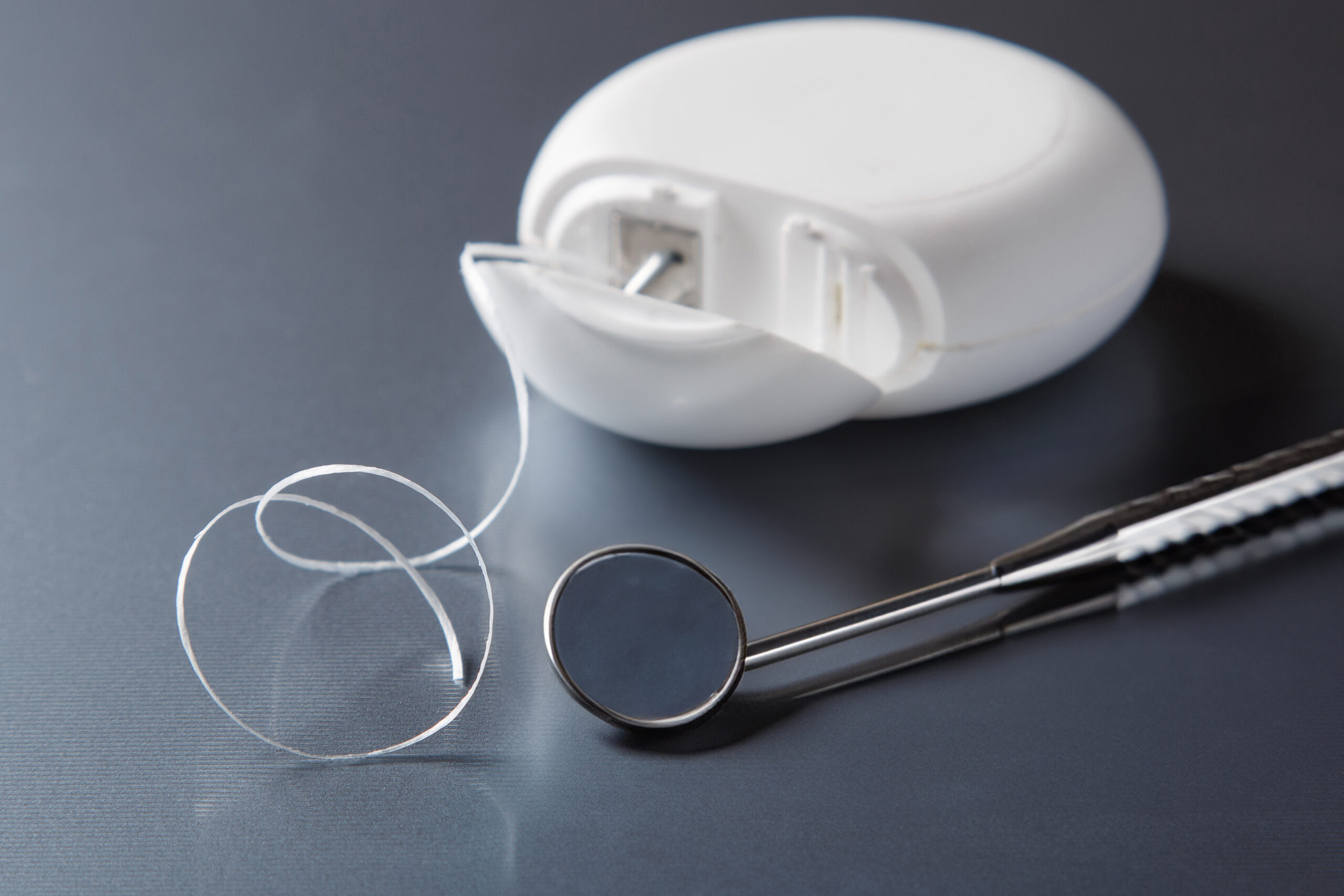
Teeth Flossing, in addition to regular brushing, is an essential element in maintaining proper oral hygiene and healthy teeth. To effectively remove food residue and bacterial plaque from the surfaces of teeth and the spaces between them, simply using a toothbrush, even of the highest quality, is not enough. It is also necessary to use dental floss. How to floss teeth properly? There is a wide selection of dental floss available, including fluoridated or non-fluoridated, waxed, unwaxed, mint-flavored, antibacterial, and many others. The appropriate dental floss should be chosen considering its thickness and the material it is made of. The thickness of the floss is an important factor in the selection process because it needs to smoothly pass through the interdental spaces with gentle resistance. Beginners are advised to choose waxed floss, which moves more easily between teeth. If you’re unsure about choosing the right dental floss, consult with a dentist. Our specialists at Warsaw Dental Center will be happy to advise you on the best choice. Teeth flossing – technique Flossing requires precision and gentleness, as too forceful execution can result in gum injury and epithelial attachment loss. We start by cutting about 35-40 cm of floss from the roll. We wrap the ends of the floss around our middle fingers, leaving about 5 cm of floss between them. Using our thumbs and index fingers (or both thumbs), we gently wrap the floss around the base of the tooth and slide it in, making sawing motions, from the contact point of the teeth to the interdental space. After inserting the floss, we make vertical motions, following the curvature of the tooth. While flossing successive teeth, it’s important to use clean sections of dental floss. In initial flossing attempts, slight bleeding and gum soreness may occur. One should not be discouraged by this, but rather continue the procedure with greater gentleness. These minor, undesired symptoms resulting from lack of finesse in floss handling are much less of a threat to teeth than not flossing at all. Dental floss – Things to remember Neglecting regular use of dental floss can lead to undesirable consequences such as tooth discoloration, cavities, and the accumulation of dental plaque (tartar) in the crevices, which in turn increases the risk of tooth decay and periodontal disease, and even tooth loss. Remember, flossing should be done before every brushing. An alternative to flossing is irrigation, which is an effective method of maintaining hygiene, especially when wearing various types of prosthetic work. If you need help with maintaining proper oral hygiene, schedule a consultation at Warsaw Dental Center. Our team of specialists will help you take care of your dental health.
Interdental brushing: everything you need to know
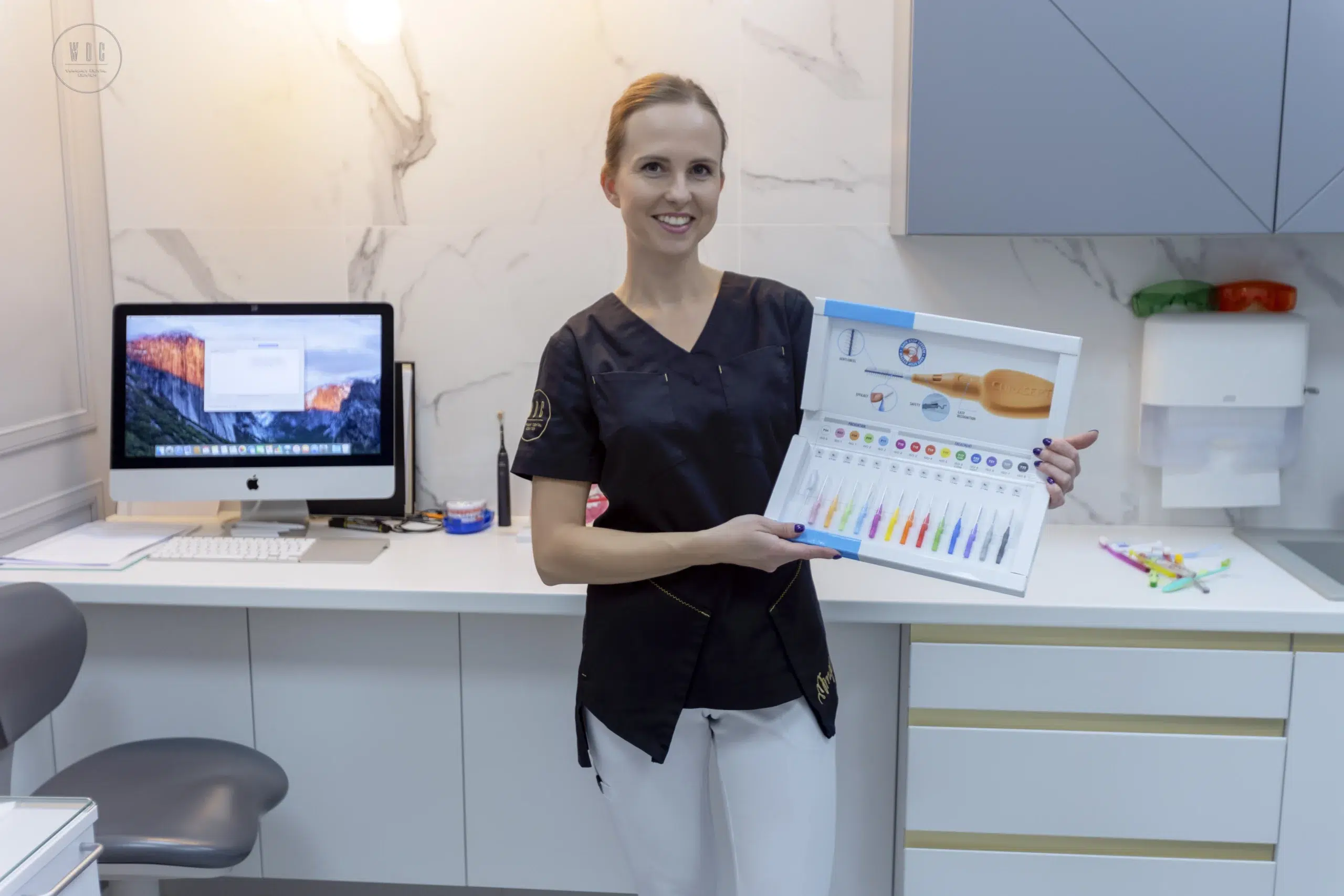
What is interdental brushing? There is an interdental space between every two teeth in the human mouth. It may be very small or easily visible, but it is always there. Teeth are never perfectly straight; they are wider at the crown and thinner at the neck, so there is always some space between two touching teeth. Because the interdental space is inaccessible to a toothbrush, it cannot be reached with traditional brushing. As a result, bacteria accumulate in the interdental space and can remain intact for a long time. The bacteria produce toxic waste that weakens the enamel and irritates the gums, ultimately causing tooth decay and periodontal disease. There is also an odor that is caused by bacteria living and reproducing between the teeth. To prevent these effects, we must physically break down the bacterial colonies that accumulate between our teeth. And for this we need: a special type of toothbrush, small enough to fit between our teeth, soft enough not to damage enamel and gums, but effective enough to remove all bacterial residues with an inward and outward motion. Why not just floss? Dental floss was revolutionary for its time, and then interdentals took over. Dental floss is perfect for placing between teeth (especially front teeth) and removing part of the bacterial film from the interdental space. However, dental floss would never reach every corner of the interdental space. As a string, it can only clean regularly shaped surfaces. Irregular surfaces and pockets between teeth (such as back teeth) are still inaccessible to dental floss. What is important in an interdental brush? Size. Interdental brushes should be selected according to the size of the interdental spaces. It is recommended that the interdental spaces be measured by a healthcare professional to obtain accurate dimensions. You will receive a size chart that will indicate each interdental space with the appropriate toothbrush sizes you need. Softness and performance. The bristles of the toothbrush must be soft so that they do not damage the teeth or irritate the gums. Maintenance and replacement. Some interdental brushes come with a disposable handle. Interdental brushing is a key element of oral hygiene, which not only prevents the formation of caries or periodontal disease, but also has a positive effect on fresh breath and the overall condition of the teeth. Choosing the right toothbrush and regular, precise cleaning of the interdental spaces are invaluable steps in taking care of your oral health. Remember that this task requires regularity and precision, but the effects in the form of healthy teeth and gums are worth it.