

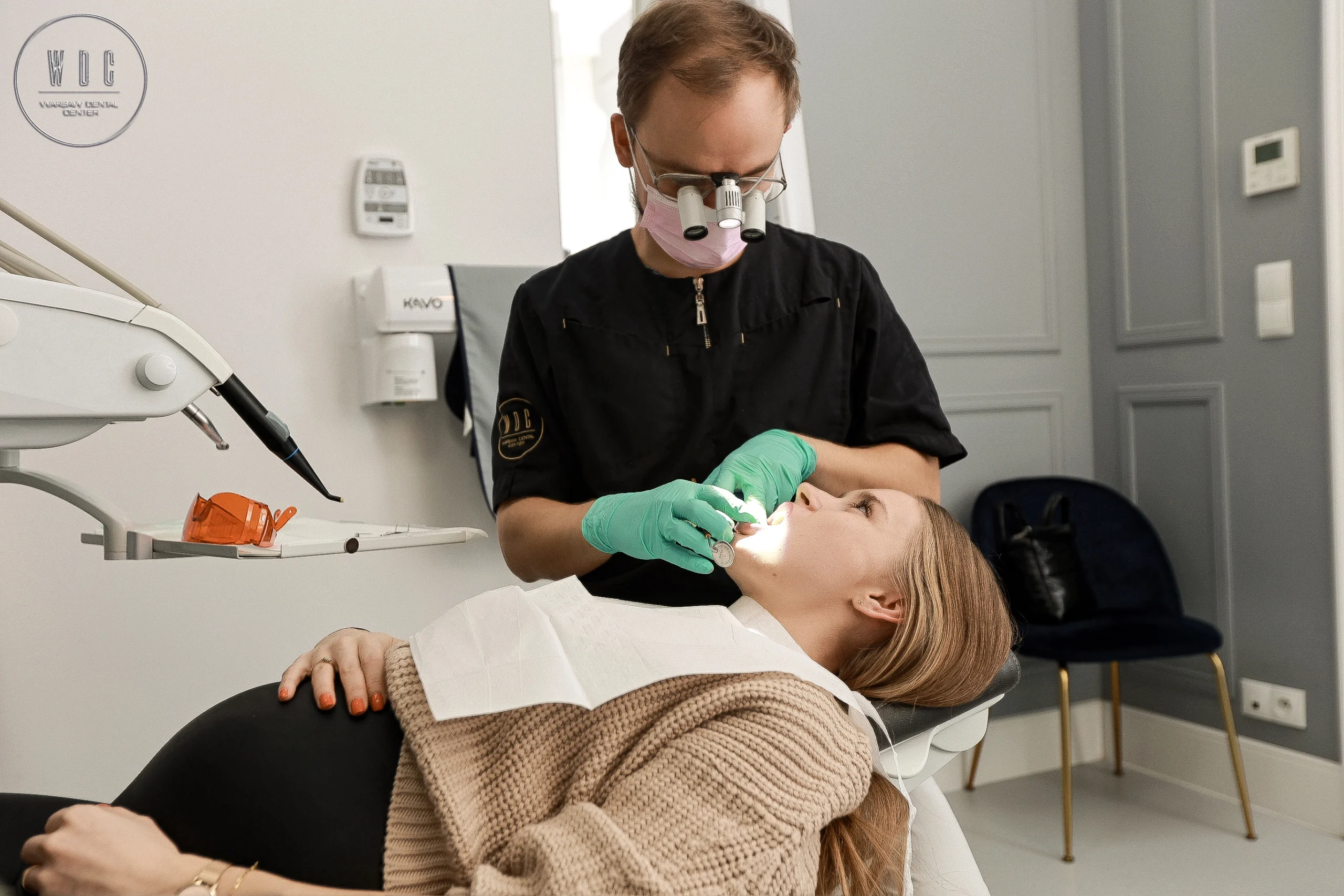
Dr. Bartosz Leończak performs a procedure on a pregnant patient Dental Treatment During Pregnancy – Is It Safe? The answer is yes! It is safe, but there is a lot of information to consider. Oral health during pregnancy requires special attention. Oral Health during Pregnancy During pregnancy, the risk of gingivitis and caries increases due to various factors: Gingivitis – Bacterial buildup is the main cause of gingivitis. During pregnancy, hormones can increase the response to bacteria in the gum tissue, causing this condition. Cavities – It is also worth paying attention to the risk of caries during this period. Pregnancy changes a woman’s diet, often causing cravings for foods that can increase the risk of tooth decay. Additionally, acidity in the mouth, caused by e.g. frequent vomiting, may lead to weakening of the enamel and susceptibility to caries. For this reason, the special importance of daily oral care during pregnancy should be emphasized. By taking care of her oral health, a woman has a chance to have a positive impact not only on her own health, but also on the health of your child. You should not be afraid of visiting the dentist during this period, as professional teeth cleaning is considered safe dental treatment during pregnancy. X-rays Most dental procedures and routine checkups require X-rays. Good news! Studies have shown that the use of these procedures does not pose a threat to pregnant patients, provided that a protective cover is used for the abdominal cavity and thyroid gland. To sum up, it is always recommended to consult your midwife and dentist before undertaking any dental procedures during pregnancy. The Warsaw Dental Center team is available to answer all your questions and concerns!

Dental treatment during pregnancy
Pregnancy is an extraordinary period in every woman’s life. Over the course of nine months, the body undergoes significant changes, which require special care and attention. Future mothers try to avoid medications and take care of their diet, well-being and immunity. Unfortunately, not everything can be predicted. What should you do if you experience a sudden toothache while waiting for your baby to be born? Can dental treatment be undertaken in such a situation? What forms of anesthesia are safe during pregnancy? Dental treatment during pregnancy – is a visit to the dentist possible? Regular visits to the dentist reduce the risk of caries and allow you to respond to oral problems on an ongoing basis. It is worth undergoing a dental examination before getting pregnant, as hormonal changes affect the health of the oral cavity. Increased hormone levels can lead to swelling and redness of the gums. The optimal period for more advanced treatments is usually the 4th-6th month of pregnancy, although most of them can be performed throughout the entire pregnancy. Safe dental anesthesia during pregnancy Many women are concerned about the safety of dental anesthesia during pregnancy, especially due to restrictions on the use of medications during this period. However, modern medicine takes into account the safety of the mother and child. Currently used anesthetics, such as preparations containing articaine, are adapted to the needs of the pregnant patient, minimizing the risk to the fetus. Safe anesthesia allows for effective dental treatment, which is important for the future mother’s well-being and avoiding stress, which may also negatively affect the health of the fetus. Root canal treatment during pregnancy In the first trimester of pregnancy, the mother’s body is particularly susceptible, so it is recommended to avoid more advanced dental procedures. In the case of root canal treatment, it is worth postponing it until the second trimester or, preferably, until after the baby is born cka. However, delaying root canal treatment may lead to inflammation that threatens the health of the mother and baby. In such situations, treatment should be carried out as soon as possible, often using modern methods under a microscope, which shorten the duration of the procedure. Sandblasting teeth during pregnancy Teeth sandblasting is absolutely safe and even recommended for pregnant women. The process of removing plaque helps prevent the growth of decay-causing bacteria and tartar. It is recommended to sandblast at least twice every nine months. Tooth removal or extraction during pregnancy If a tooth needs to be removed, it is a good idea to postpone the procedure at least until the second trimester of pregnancy or, if possible, until after the baby is born. This is a more invasive procedure that may carry some risks for mother and baby. Therefore, doctors suggest optimal moments to perform it. Teeth whitening during pregnancy Future mothers should refrain from whitening their teeth during pregnancy due to the presence of strong chemicals in the preparations. These substances may pose a potential risk to the health of the fetus. Treatment of cavities during pregnancy Treatment of dental cavities, after appropriate anesthesia, is relatively non-invasive and can be performed during pregnancy. Untreated caries can lead to inflammation that is dangerous for both mother and child. General oral hygiene during pregnancy Maintaining your oral health during pregnancy is crucial. Regular visits to the dentist in each trimester, thorough oral hygiene, using appropriate dental products for pregnant women and following your doctor’s recommendations are important steps in ensuring your oral health during this unique period. In summary, dental care during pregnancy is possible and important for the health of mother and child. Safe anesthesia and adapted methods Treatment modalities allow you to maintain a healthy oral cavity during this unique period.