


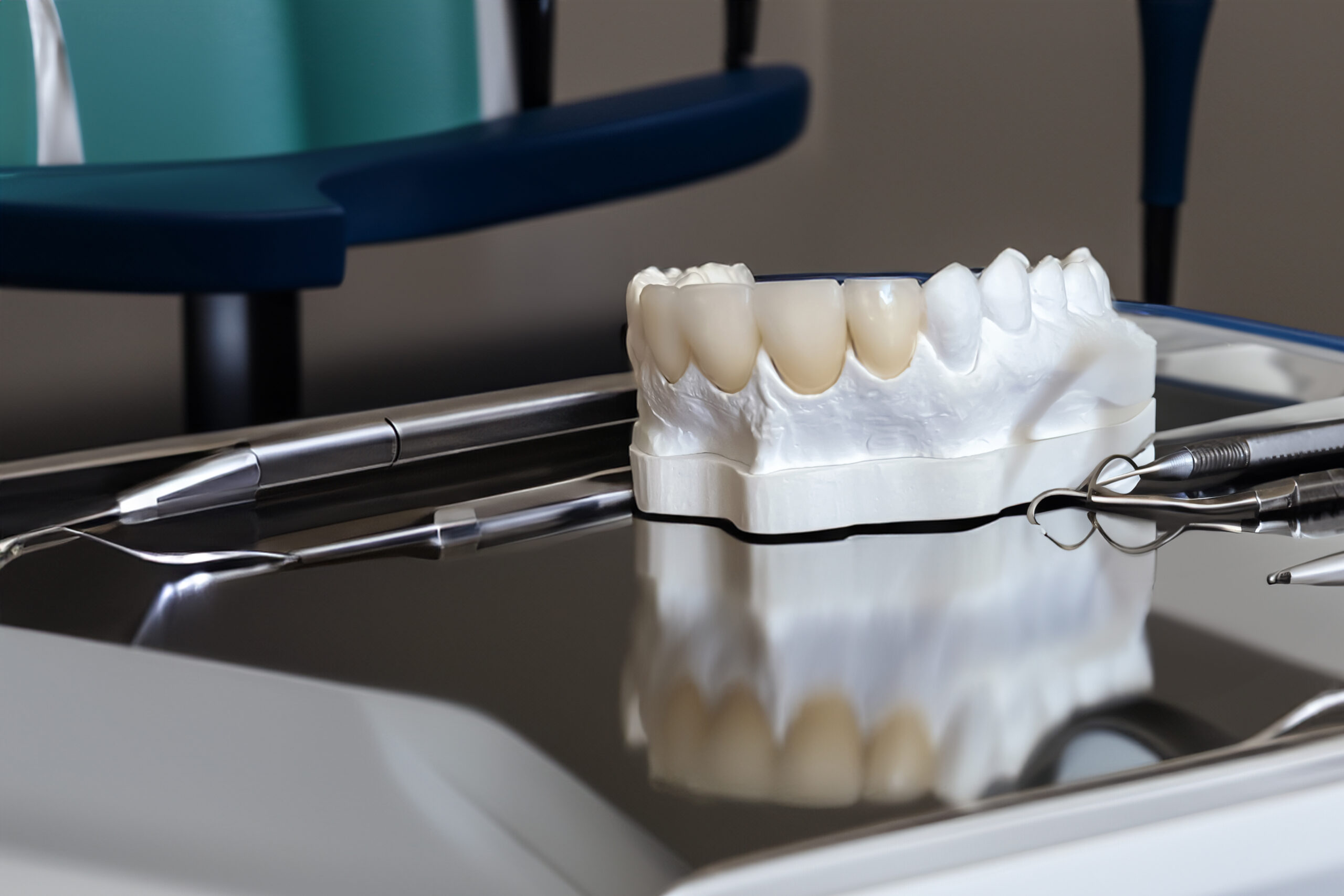
An artificial tooth crown is a type of prosthetic restoration used when the natural crown has been damaged. The causes of this can be various: trauma, decay, or anatomical anomalies. Aesthetic reasons, such as improving the shape or color of the tooth, may also be an indication for crown placement. A tooth crown is a kind of “cap” attached to a specially prepared, trimmed tooth. It provides a solution for strengthening the tooth and restoring its functionality and aesthetics. Crowns can be temporary or permanent. Temporary crowns serve to protect the tooth between visits to the dentist, before the final restoration is applied. They are usually made of acrylic and do not have high durability. Types of Tooth Crowns Classification according to the material they are made of: Metal Crowns Advantages: high durability, low cost. Disadvantages: may cause allergic reactions, unnatural appearance. Porcelain Crowns (All-Ceramic) Advantages: no allergic reactions, very good aesthetics – thanks to partial translucency, they mimic natural enamel excellently, do not change the color of adjacent tissues. Disadvantages: high hardness may affect wear on opposing teeth, quite fragile, may crack with improper use. Zirconia Crowns Advantages: no allergic reactions, high durability, good aesthetics, high thermal insulation properties. Disadvantages: high hardness may affect wear on opposing teeth, limited translucency affecting aesthetics, high cost. Combined Crowns – Porcelain on Zirconia Substructure Advantages: high durability, natural appearance, no allergic reactions, excellent adhesion to the tooth. Disadvantages: require more tooth trimming due to their thickness, which may limit their application. Combined Crowns – Porcelain on Metal Substructure Advantages: good durability, high flexibility minimizing the risk of cracking. Disadvantages: may cause allergic reactions, as well as discoloration of adjacent tissues. Indications for Tooth Crowns cavities caused by decay, cavities resulting from trauma, enamel discoloration, e.g. after tetracycline therapy, discoloration after endodontic treatment, enamel development disorders, correction of worn and rotated teeth, improving the aesthetics of teeth Contraindications for Tooth Crowns too much tooth damage, periodontal diseases, periapical changes Treatment Process Consultation visit, often combined with radiological diagnostics Preparation, i.e. grinding of teeth, can be done under local anesthesia or sedation Impression taking, serving as a model for making crowns by the prosthetic laboratory Selection of the appropriate color and determination of the occlusal height Placement of temporary crowns, protecting the trimmed teeth Fitting of the final crowns and their cementation with specialized prosthetic cement The durability of tooth crowns depends largely on the patient, their oral hygiene, dietary habits, and regularity of check-up visits. The type of material they are made of also affects durability. Well-maintained crowns can last up to 20 years.
Dental Crowns – what are they and who should choose them?
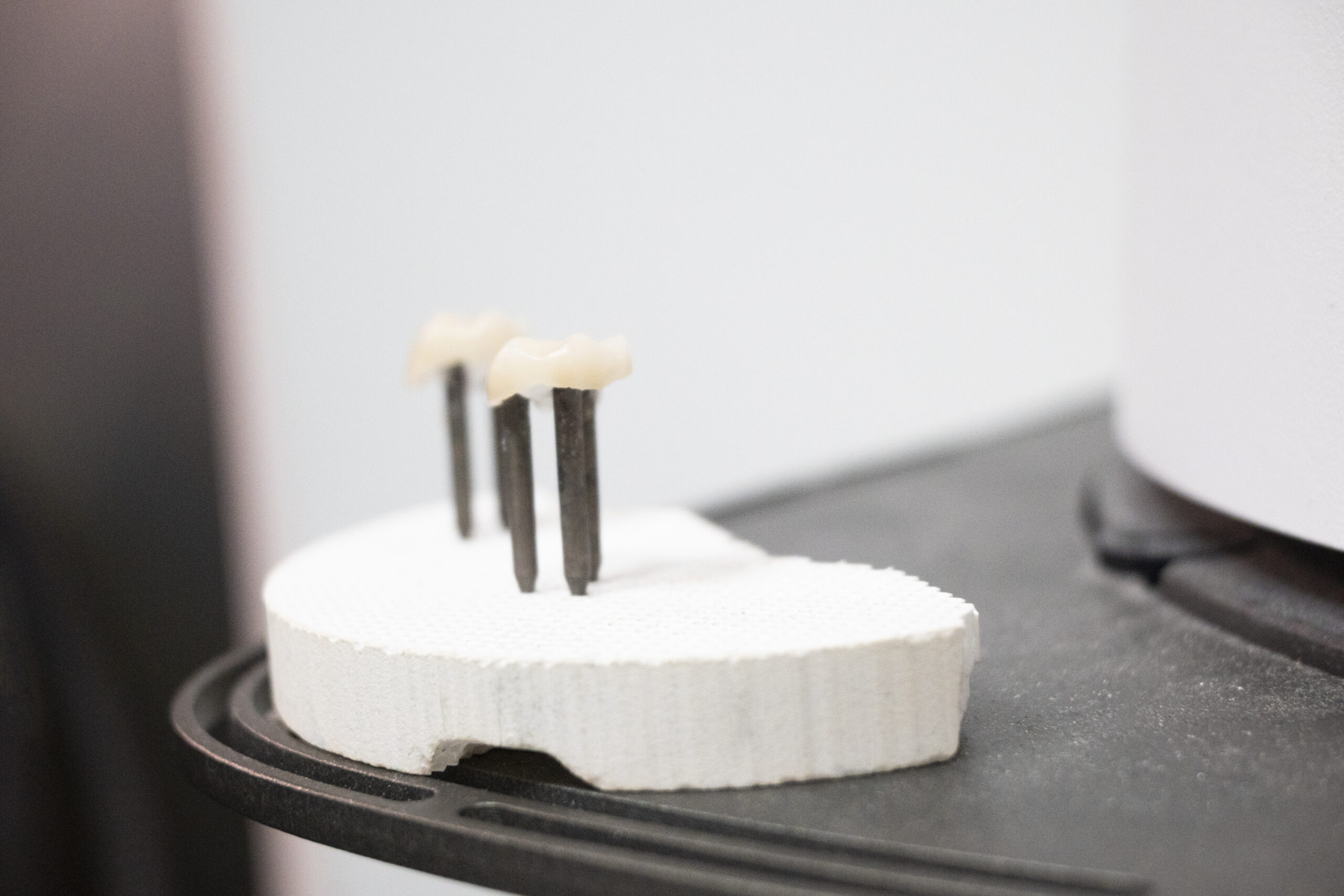
Dental Crowns and bridges are permanent prosthetic solutions that are attached to existing teeth or implants. Unlike dentures, which can be removed and cleaned daily, crowns can only be removed by a dentist. What are Dental Crowns? A dental crown provides an ideal solution for damaged teeth, offering them comprehensive coverage. Its main function is to strengthen and protect the tooth. Additionally, it improves aesthetics and aligns its appearance. Crowns can also be used on implants and can be made from various materials such as porcelain, ceramic, gold, acrylic, or iron alloy. Ceramic and porcelain crowns can be matched to the natural shade of the remaining teeth, providing a harmonious aesthetic effect. Dental Crowns and Their Types Dental crowns are classified based on the material from which they are made. Here are their types: Porcelain Crowns – can be made on a metal or ceramic substructure. Metal core crowns are particularly recommended for molars. Gold Substructure Porcelain Crowns – recommended for patients with severely damaged teeth due to the strong anti-cavity action of gold. All-Ceramic Crowns – characterized by exceptional aesthetics. Due to their appearance, they are difficult to distinguish from natural teeth. Such crowns are commonly used for anterior teeth replacements. All-Metal Crowns – are currently used much less frequently. Composite and Acrylic Crowns – serve as temporary solutions. However, if porcelain crowns cannot be applied to a patient (e.g., due to material hardness), it is possible to have permanent crowns made of composite or acrylic. Dental Crowns – When Are They Needed? Dental crowns are used as prosthetic replacements, especially for teeth that have undergone endodontic (root canal) treatment. Additionally, they are used in cases of congenital enamel deficiency and for rebuilding damaged or decayed teeth. There are several situations in which dental crowns are recommended: Protecting a weak tooth from fracturing Securing a dental bridge Covering a dental implant Correcting a misshapen tooth Therefore, dental crowns serve not only to restore aesthetics and bite function but also to protect and stabilize teeth and other prosthetic solutions. Contraindications for Dental Crowns During a visit to the dental office, the dentist assesses whether the condition of the remaining tooth allows for the placement of a crown. Dental crowns are not recommended in cases where: The remaining tooth structure above the gum line is less than 2-3 mm Teeth are severely decayed, reaching the gum line or even deeper In the above situations, the dentist often orders the lengthening of the clinical crown of the tooth, followed by the creation of a temporary crown. After six months, the dentist prepares a porcelain crown for placement. Are Dental Crowns Durable? The durability of dental crowns largely depends on the precision and skill of the dentist. It is essential to perform the procedure accurately and use appropriate dental techniques. With a well-made crown, one can expect it to last for 10-15 years.
Crowns. What are they and when is it recommended to wear them?
Dental crowns and prosthetic bridges are permanent restorations that cover or replace damaged and lost teeth. They are placed to protect and strengthen damaged teeth. Unlike dentures, they are not removed and cleaned every day. Crowns and bridges are an increasingly popular way to improve the appearance of your teeth. When should you put a crown on your tooth? It is worth opting for a dental crown replacement after root canal treatment, when tooth reconstruction is generally necessary. Installing a crown is also recommended if the teeth are worn or otherwise damaged, or severely damaged, e.g. by large carious cavities. Dental crowns are also placed in cases such as: – the need to protect a weak tooth from breaking; – fixing the prosthetic bridge; – implant coverage; – covering a deformed tooth; – the need to protect teeth with congenital lack of enamel. It also happens that crowns are prosthetic replacements in the case of complete toothlessness. They are then placed at the final stage of implant treatment. There are also contraindications to the installation of a crown. The condition of the tooth must allow for this type of restoration. – This is not possible in the case of: tooth remnants above the gum smaller than 2-3 mm; – damaged teeth due to caries reaching the gum level or beyond. In such situations, the crown of the remaining tooth is usually clinically lengthened and a temporary crown is placed. After about six months, when the technician in the laboratory works on making a prosthetic crown, the temporary crown is replaced with the final one at a separate visit. What types of prosthetic crowns are there? There are several types of prosthetic crowns. They are distinguished by, among others: due to the degree of tooth coverage: – partial – covering only a fragment of the tooth, made of high-quality gold. This type of prosthetic restorations are placed on a living tooth and attached to the space above the neck, so they do not irritate the tooth. ąsł. Nowadays, they are used quite rarely due to their high price, hard-to-find material and unsatisfactory dental aesthetics; – complete – which are among the most commonly used crowns and allow the reconstruction of the shape, function, size and aesthetics of the tooth. In the case of this type of crowns, the dentist carefully profiles their contours, thanks to which maintaining proper oral hygiene does not pose any major problems; Another division of types of dental crowns is used depending on the type of material from which they are made: – porcelain crowns on a metal or ceramic base. A porcelain crown on a metal base is most often placed in the case of reconstruction of side teeth; – Porcelain crowns on a gold base are recommended for teeth severely damaged by caries. This metal has a bacteriostatic effect; – zirconium oxide crowns – with exceptional strength and resistance to mechanical damage, which means that this type of crown can be placed both as a restoration in the front part of the mouth and in its side parts; – all-ceramic crowns – with an extremely aesthetic appearance, which are difficult to distinguish from natural teeth. An all-ceramic crown is an ideal replacement for damaged front teeth; – full-metal crowns – used widely in the past, now they are used very rarely. Older metal crowns are most often replaced by crowns made of more natural materials: porcelain or zirconium oxide; – Composite or acrylic crowns are most often temporary crowns. In some cases, however, it is also possible to make a prosthetic crown from them. The dental crown was traditionally cast in special molds. However, the development of technology has significantly changed the way crowns are made. They can now be formed using a 3D scanner and precise milling machines. If necessary, the tooth crown can also be veneered with porcelain by firing or pressing. Crowns – what does the procedure look like? putting on crowns? Dental crowns can be installed in just two visits to the dentist’s office. During the first visit, the teeth are prepared (grinded), impressions are taken and the color of the teeth around the area being treated is checked. A temporary crown is placed on the polished tooth, which protects it and ensures comfort for the patient thanks to its aesthetic appearance. During the second visit, the temporary crown is replaced with ready-made permanent crowns. Local anesthesia is used both during the preparation procedures and when installing the crown, making the procedure painless for the patient. Crowns for front teeth and veneers Veneers are thin shells made of acrylic, composite or porcelain. They are glued to the tooth on its outer (face) side. This is an ideal solution for people who have healthy, undamaged teeth (or have undergone all necessary procedures to cure their teeth), but want to improve the aesthetics of their smile and regain the snow-white color of their teeth. People whose teeth are damaged by deep caries, fractures or cracks should consider a prosthetic crown. Root canal treatment, which generally involves quite a significant loss of natural teeth, will also require the placement of a crown to restore the natural anatomy and functionality of the mouth. Dental crowns at Warsaw Dental Center The Warsaw Dental Center, a dental clinic in Warsaw, uses the highest quality materials, which allow both the placement of crowns on implants and the use of a crown-root post. We use a crown-root post to strengthen teeth treated with root canals, which allows us to largely preserve the natural teeth. The experience of the staff and the pleasant atmosphere in the office allow you to fully take care of the condition of your teeth and enjoy the durability of the restorations made with the utmost care at Warsaw Dental Center Article written on September 30, 2022 and updated on February 21, 2024 based on the latest technology and research.