

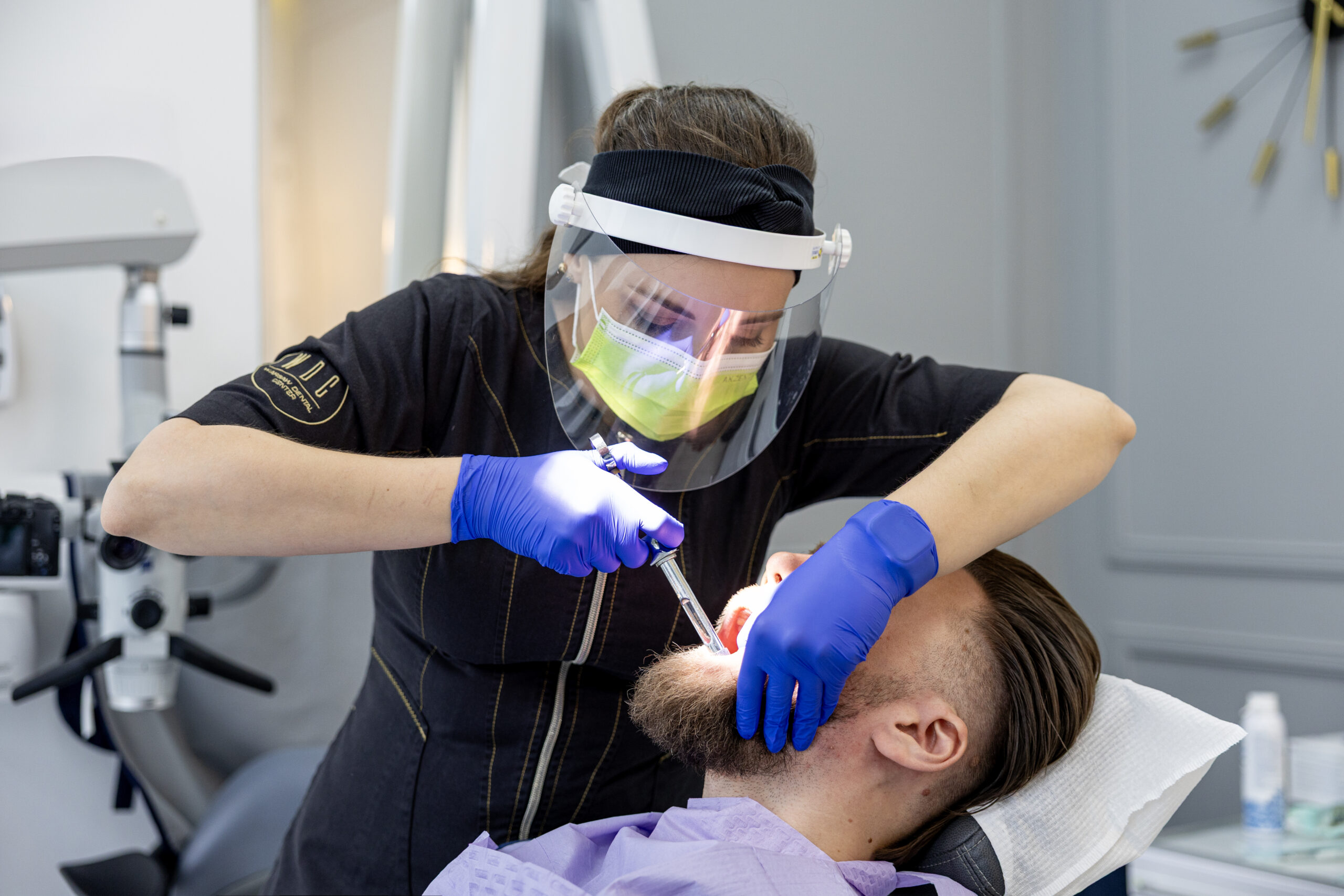
Dental bonding is one of the fastest and most affordable ways to improve your smile without invasive procedures. At our clinic in central Warsaw, patients often choose bonding as a cosmetic alternative to veneers or crowns — especially when they want quick results at a reasonable price. As a dentist with many years of experience in cosmetic dentistry, I am often asked: How much does dental bonding cost in Warsaw, and when is it the right choice? In this article, I will explain what bonding is, what benefits it offers, how much it costs in 2025, and how it compares to other treatments. What is dental bonding? Bonding involves applying a tooth-colored composite resin directly onto the tooth surface to improve its shape, size, or color. With this method, we can: close gaps between teeth (diastema), rebuild chipped or fractured enamel, lengthen teeth that appear too short, cover stains or discoloration. The treatment is completely painless, does not require anesthesia, and can be done in a single visit. Dental bonding price in Warsaw At Warsaw Dental Center, the cost of dental bonding is 1,000 PLN per tooth. For comparison: a composite filling costs 700–800 PLN, a porcelain veneer costs around 4,000 PLN, a ceramic crown starts at 2,500 PLN. 👉 This makes bonding an excellent middle-ground solution — less expensive than veneers, but more aesthetic than a regular filling. Check our full price list here When is bonding the best choice? Bonding is ideal for patients who want a quick and affordable improvement in smile aesthetics. It works particularly well in cases such as: small gaps between teeth, reshaping front teeth, restoring chipped edges, masking stains that do not respond to whitening. For larger corrections or when maximum durability is needed, we recommend veneers or ceramic crowns. Benefits of dental bonding immediate results (usually in one appointment), non-invasive and painless procedure, no drilling or reduction of natural tooth structure, more affordable than veneers, reversible — bonding can be removed or replaced if necessary. How does the procedure work? Consultation – the dentist examines your teeth and selects the right shade. Surface preparation – the tooth is cleaned and gently etched. Application of composite resin – the dentist sculpts the material to the desired shape. Curing with a special light – hardening the composite. Polishing – achieving natural shine and smooth finish. The entire procedure usually takes 30–60 minutes per tooth. How long does bonding last? With proper care, dental bonding lasts between 3 and 5 years. Lifestyle habits (coffee, tea, wine) may affect discoloration. To maintain results, we recommend regular check-ups and professional hygiene appointments. FAQ – Common questions about bonding Is bonding painful?No, it is painless and usually does not require anesthesia. How much does bonding cost in Warsaw?The price is 1,000 PLN per tooth at our clinic. Can bonding be combined with whitening?Yes, but whitening should be done first (see our whitening offer here), followed by bonding to match the shade. Does bonding damage natural teeth?No, bonding is non-invasive and preserves healthy tooth structure. Conclusion Dental bonding is a fast, painless, and cost-effective way to improve your smile. At Warsaw Dental Center, we use advanced materials and techniques to achieve natural and aesthetic results. If you are considering a smile makeover, bonding might be the perfect solution for you. 👉 Book your consultation today and discover how easily you can transform your smile. Medical Director, DDS, MSc Urszula Leończak

Frequently Asked Questions About Tooth Bonding – A Complete Guide
Tooth bonding is one of the most popular dental procedures for improving the aesthetics of a smile. It is a quick and painless method to repair minor tooth damage and enhance their appearance. Below we answer the most frequently asked questions about bonding to help you better understand this procedure and its benefits. What is tooth bonding? Tooth bondingis a procedure in which a composite resin material is applied to the tooth surface. The dentist then sculpts the material to cover imperfections such as cracks, discolorations, or gaps between the teeth. Bonding can also be used to lengthen or reshape a tooth. What are the benefits of tooth bonding? The benefits of tooth bonding include: – Speed – The procedure typically takes 30 minutes to 1 hour per tooth. – Painless – Bonding does not require anesthesia as it does not deeply interfere with the tooth structure. – Cost– The cost of tooth bonding is lower than other aesthetic treatments, such as veneers or crowns. Is tooth bonding durable? Yes, but the durability of tooth bonding depends on several factors. With proper oral hygiene and regular dental check-ups, bonding can last between 3 to 10 years. Composite material is less durable than porcelain, so it may discolor or become damaged if not properly cared for. How much does tooth bonding cost? The cost of tooth bonding varies depending on the location and scale of the procedure. On average, in Poland, the cost ranges from 300 to 600 PLN per tooth. In high-end dental clinics, the price may be higher due to the quality of materials used and the dentist’s experience. How long does tooth bonding take? Tooth bonding is a relatively quick procedure, taking 30 minutes to 1 hour per tooth. The time depends on the size of the surface that needs repair and the number of teeth being bonded. Is tooth bonding painful? No, tooth bonding is a painless procedure. In most cases, it does not require anesthesia unless larger cavities or tooth reconstruction are needed. What are the indications for tooth bonding? Bonding is ideal for individuals who want to improve the appearance of their teeth without invasive procedures. The most common indications include: – Discoloration that cannot be removed with whitening – Cracks or chips in the teeth – Small gaps between teeth – Changing the shape or length of teeth – Repairing worn-down enamel What are the limitations of tooth bonding? While tooth bonding has many advantages, there are some limitations. The composite resin used in bonding is not as stain-resistant as porcelain, so it may discolor over time. Additionally, bonding is not as durable as porcelain veneers, meaning it may require more frequent repairs. How should you care for teeth after bonding? To keep your tooth bonding in good condition, it’s recommended to: – Avoid consuming foods and drinks that can stain, such as coffee, tea, or red wine. – Brush your teeth regularly with a soft-bristle toothbrush and use low-abrasion toothpaste. – Avoid biting on hard objects like nuts, pencils, or nails, which could damage the bonding. – Visit your dentist regularly for check-ups to monitor the condition of the composite. Can bonding be done on front teeth? Yes, tooth bonding on front teeth is a popular method to improve the aesthetics of a smile. Bonding allows for correcting the shape, color, and damage of front teeth, making the smile look more attractive. What are the differences between bonding and veneers? Tooth bonding and veneers differ in terms of material and durability. Veneers are thin porcelain shells that are more durable and resistant to stains than the composite resin used in bonding. On the other hand, tooth bonding is a cheaper and less invasive procedure, though it may require more frequent repairs. Conclusion Tooth bonding is a quick, painless, and relatively affordable method to improve the appearance of teeth, available in many dental clinics. With modern composite materials, it’s possible to repair cracks, discolorations, or gaps between teeth in an aesthetic and comfortable manner. If you’re considering tooth bonding, consult dr Natalia Rogulska at Warsaw Dental Center to see if this procedure is right for you. Relevant links for further research: https://jada.ada.org/article/S0002-8177(14)65275-2/fulltext https://meridian.allenpress.com/operative-dentistry/article/38/6/E237/206253/Comparison-of-Enamel-and-Dentin-Shear-Bond
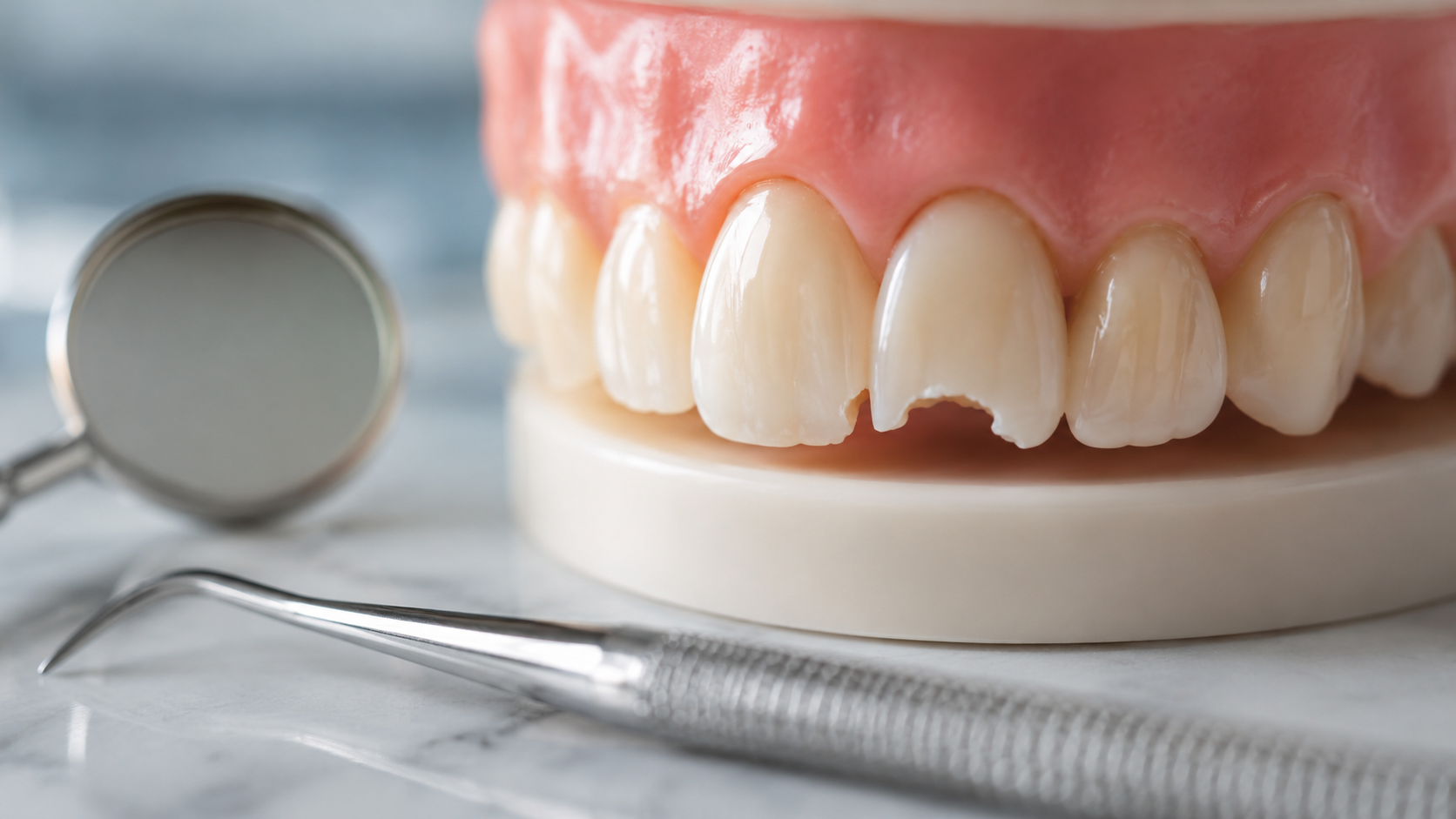
Chipped tooth – what should you do?
Often, errors in the brushing technique, excessive use of whitening toothpastes, a harsh diet or even mechanical injuries lead to a situation in which the tooth may be damaged or broken. Many external factors influence dental health. What should we do when we find ourselves in such a situation? This question will be answered by Dr.Urszula Leonczak in today’s episode. We encourage you to watch it! Subscribe to the Warsaw Dental Center youtube channel: @WarsawDentalCenter If you want to stay up to date with the latest information on oral health and modern dental solutions, we encourage you to subscribe to the Warsaw Dental Center channel. After watching the episode, be sure to click 🔔 to receive notifications about our latest content! If you want to stay in touch with us on other social media platforms, please follow us on: ► Facebook: Link to the Facebook page ► Instagram: Link to Instagram profile
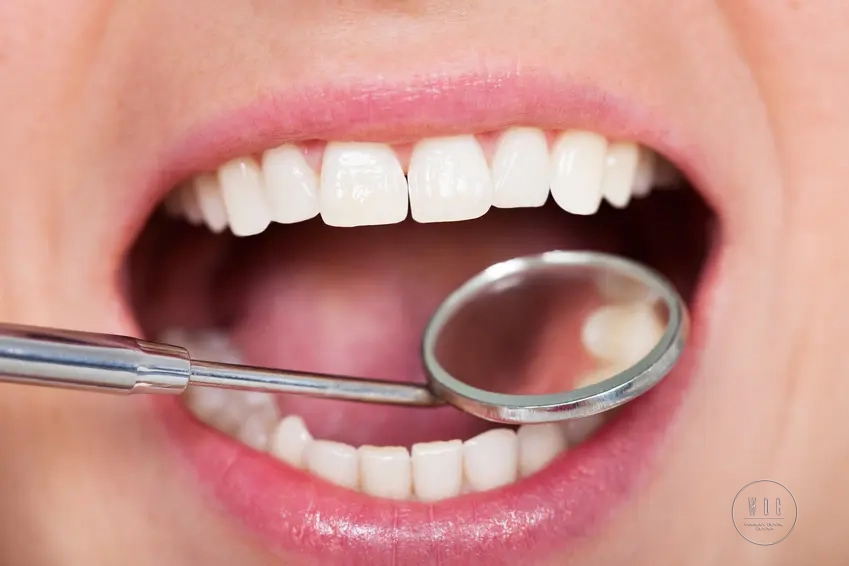
Bonding – a method of tooth reconstruction
Bonding – you know that this term is one of the most frequently searched terms by people interested in aesthetic dentistry. We would like to tell you what exactly this procedure involves, through the statements of experts from Warsaw Dental Center. Bonding: What exactly is it? The term “bonding” comes from “bond”, i.e. the system that connects the composite to the tooth. It is used to describe a method of minimally invasive aesthetic improvement. In our dental clinic, Warsaw Dental Center, we offer bonding treatment for patients who want to solve minor problems, such as slight crookedness, rotation, asymmetry of the shape or color of teeth. Before starting the procedure, our doctors conduct a thorough dental interview and examination to assess whether it is appropriate and how many teeth it will cover (it is important that bonding can be performed on a single tooth). As a result of this approach, we can plan for the expected results. Bonding Warsaw – how to prepare for the procedure When assessing the condition of the teeth, we carefully remove any cavities, perform professional hygiene, and possibly whiten them in the office (although this is not necessary, it may be recommended). Then, based on scans or impressions and photographic documentation, we create a design of the final work, known as “wax up”. In the next visit, the patient has the opportunity to assess the so-called “mock up”, i.e. a model presenting the design of the work. This allows for any adjustments to achieve the expected results. The further process includes the use of special composite injection splints, prepared based on the previous steps. The dentist injects liquid composite into the area of the tooth being rebuilt and then hardens it using UV rays emitted by a lamp. The final step is a precise finishing that gives the restoration a natural shine. The durability of the effect depends on your lifestyle and oral hygiene. Typically, additions to vol ego type persist for 3-5 years. Regular check-ups, a proper diet and healthy chewing habits are important to maintain their durability. How much does bonding cost? Due to its price (starting from PLN 700 per tooth), the bonding treatment is an attractive alternative for those patients who do not decide to have veneers installed. However, it is worth remembering that full prosthetic reconstruction offers long-lasting effects. For bonding procedures, in the renowned Warsaw Dental Center clinic, the contact specialists are Dr. Natalia Rogulska and Marcin Kopeć.