

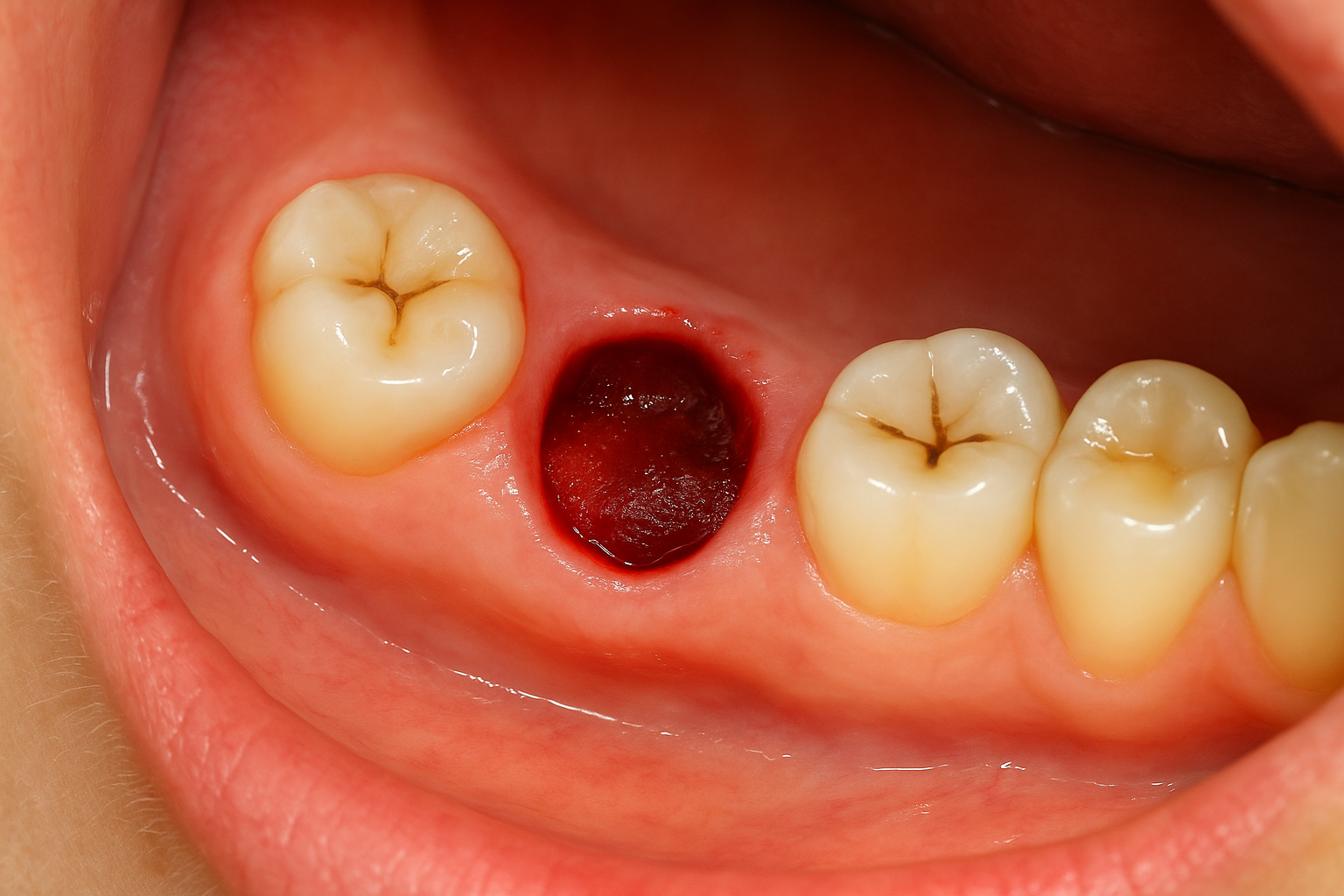
Tooth extraction is one of the most common oral surgery procedures. While the procedure itself is performed under anesthesia and is painless, what happens afterward is crucial for recovery. One of the most important elements of this healing process is the blood clot that forms in the socket where the tooth was removed.
As a dentist with experience in oral surgery, I often remind my patients that “the clot is a natural dressing.” Its presence is essential for proper healing, and losing it can lead to serious complications such as dry socket.
In this article, I will explain:
- why the blood clot is so important,
- what normal healing looks like,
- which mistakes may cause complications,
- and how to avoid problems after extraction.
The Role of the Blood Clot
A Natural Dressing
The blood clot in the socket acts as a protective barrier, shielding the bone and nerves from bacteria, food, and external irritants.
Starting the Healing Process
The clot allows healing cells to reach the wound and begin tissue regeneration. It essentially activates the body’s repair mechanism.
Protection from Pain
Patients who lose the clot often experience severe pain. This is the hallmark symptom of dry socket, one of the most common complications after extraction.
Normal Healing After Extraction
- First hours – the clot forms and fills the socket.
- 1–3 days after extraction – swelling and tenderness appear, which is a normal reaction. The clot stabilizes.
- 1 week – soft tissue begins to grow over the clot, gradually closing the wound.
- Several weeks – bone regenerates beneath the gum surface.
If the clot is lost too early, this process is disrupted and healing takes much longer.
Common Causes of Losing the Clot
- Rinsing the mouth too soon – washes away the clot before it stabilizes.
- Drinking through a straw – suction pressure dislodges the clot.
- Smoking – nicotine reduces blood supply and slows healing.
- Touching the wound with tongue or fingers – mechanically damages the clot.
- Intense physical activity – raises blood pressure and may destabilize the clot.
What Is Dry Socket?
Dry socket (alveolitis sicca) occurs when the clot disintegrates or never forms. Symptoms include:
- severe, radiating pain (often to the ear or temple),
- bad breath or unpleasant taste,
- visible exposed bone in the socket,
- delayed healing.
Dry socket requires urgent dental care. The dentist will clean the wound and apply medication to support healing.
How to Prevent Complications After Extraction
Post-Extraction Instructions
After tooth removal, we always provide patients with clear aftercare instructions. The most important include:
- Do not rinse your mouth for the first 24 hours.
- Avoid smoking for at least 48 hours.
- Do not drink through a straw.
- Avoid hot, hard, and spicy foods during the first day.
- Apply cold compresses to the cheek to reduce swelling.
- Rest and avoid strenuous activity for the first two days.
Follow-Up Visits
Regular follow-up visits allow us to monitor healing. For wisdom tooth extractions, which carry higher risk of complications, follow-up is especially important.
Modern Approach at Warsaw Dental Center
At our clinic in central Warsaw, extractions – including wisdom teeth removal – are performed under local anesthesia, and if needed, sedation. Using microscopes and advanced surgical tools, we minimize tissue trauma.
We also offer platelet-rich fibrin (PRF), which accelerates healing and reduces complication risks. This solution is especially recommended for patients who want faster, more comfortable recovery.
Conclusion
A blood clot after tooth extraction is the foundation of proper healing. It protects the bone, reduces the risk of infection, and allows the body to naturally rebuild tissue. Losing the clot may result in painful complications like dry socket, requiring additional treatment.
Following post-extraction instructions and attending follow-up visits are the best ways to avoid problems.