Conservative and Esthetic Dentistry in Warsaw -
Dr. Natalia Rogulska

Bonding | Biomimetic Tooth Reconstruction | Veneers | Last Chance Treatment | Comprehensive Treatment Planning

Dr. Natalia Rogulska focuses on modern conservative and esthetic dentistry, with treatment designed to combine esthetics, function, and long-term protection of the natural tooth.

Her clinical approach is built on detailed diagnosis, high magnification, modern adhesive protocols, and treatment planning that looks beyond the procedure itself to the final long-term result.

She has performed more than 2,800 bonding procedures, with a strong focus on biomimetic reconstruction.

Dr. Natalia Rogulska

Experience that brings together
clinical practice, education, and precision

Dr. Natalia Rogulska graduated from the Medical University of Warsaw. She is an experienced lecturer at the Medical University of Warsaw in the Department of Integrated Dentistry, and for the last 3 years she has also been involved in the development of early-career dentists through DentalWings.

For five years she actively helped shape the development of future generations of dentists, combining academic foundations with the highest standards of private clinical practice.

She is an expert in conservative and esthetic dentistry. Her clinical work focuses on precise restorative treatment, reconstruction of damaged teeth, esthetic planning, and cases that require a very careful evaluation of prognosis.

She is a member of PASE, the Polish Academy of Esthetic Dentistry. She has also completed advanced training with Belograd Academy in Prague and Lassmann Education, further developing her skills in esthetics, reconstruction, and modern restorative dentistry.

Alongside her clinical work, she mentors other dentists in conservative dentistry, supporting their development in precision, planning, and clinical quality.

Since 2016, she has been an author and co-author of articles in Magazyn Stomatologiczny and other professional journals, contributing actively to the development of modern conservative and esthetic dentistry.

Key facts:

  • Medical University of Warsaw,
  • lecturer with many years of experience at the Medical University of Warsaw,
  • 3 years with DentalWings,
  • PASE member,
  • Belograd Academy,
  • Lassmann Education,
  • More than 2,800 bonding procedures, 
  • Magnification up to 25x,
  • Publications since 2016.
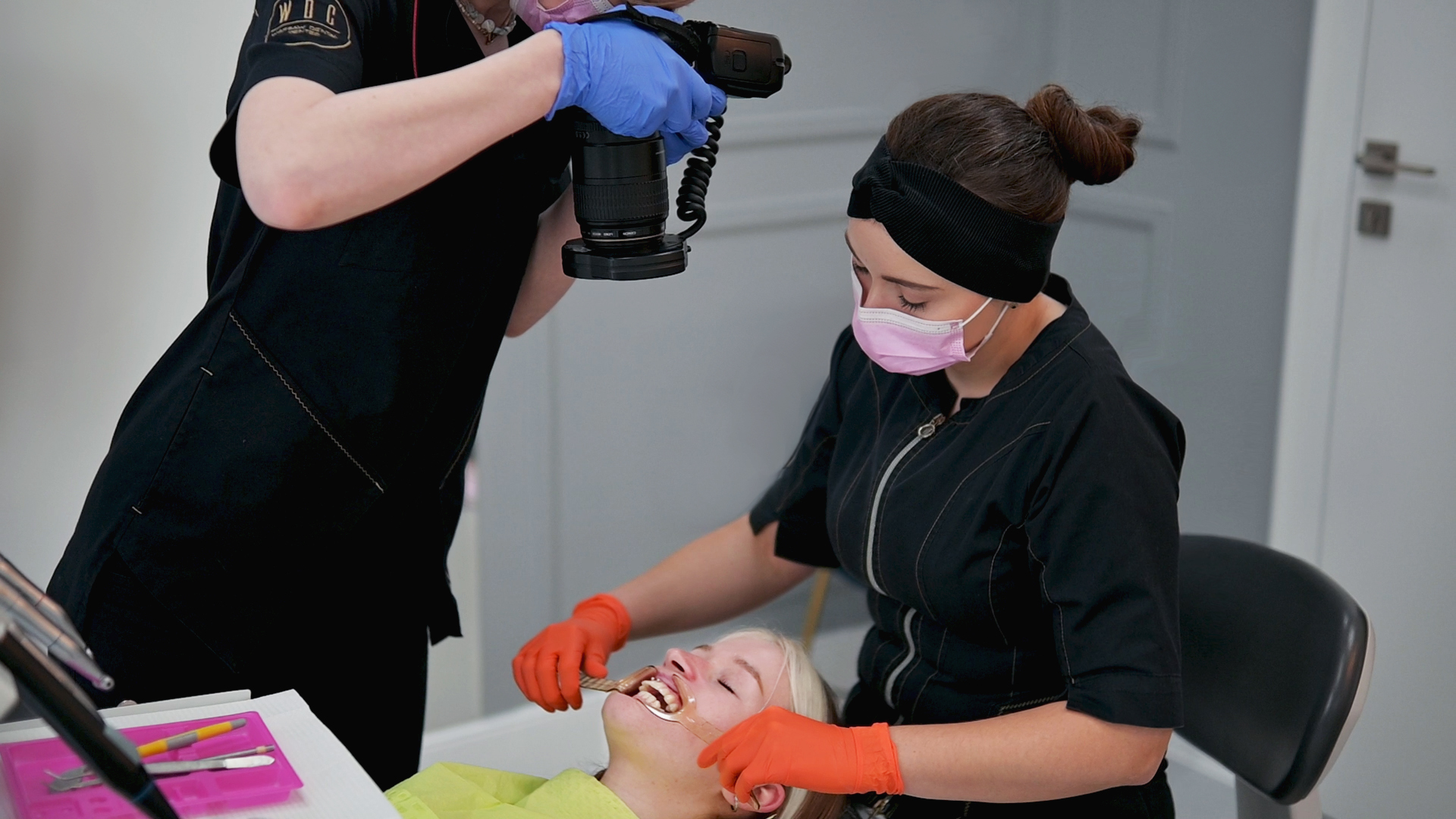
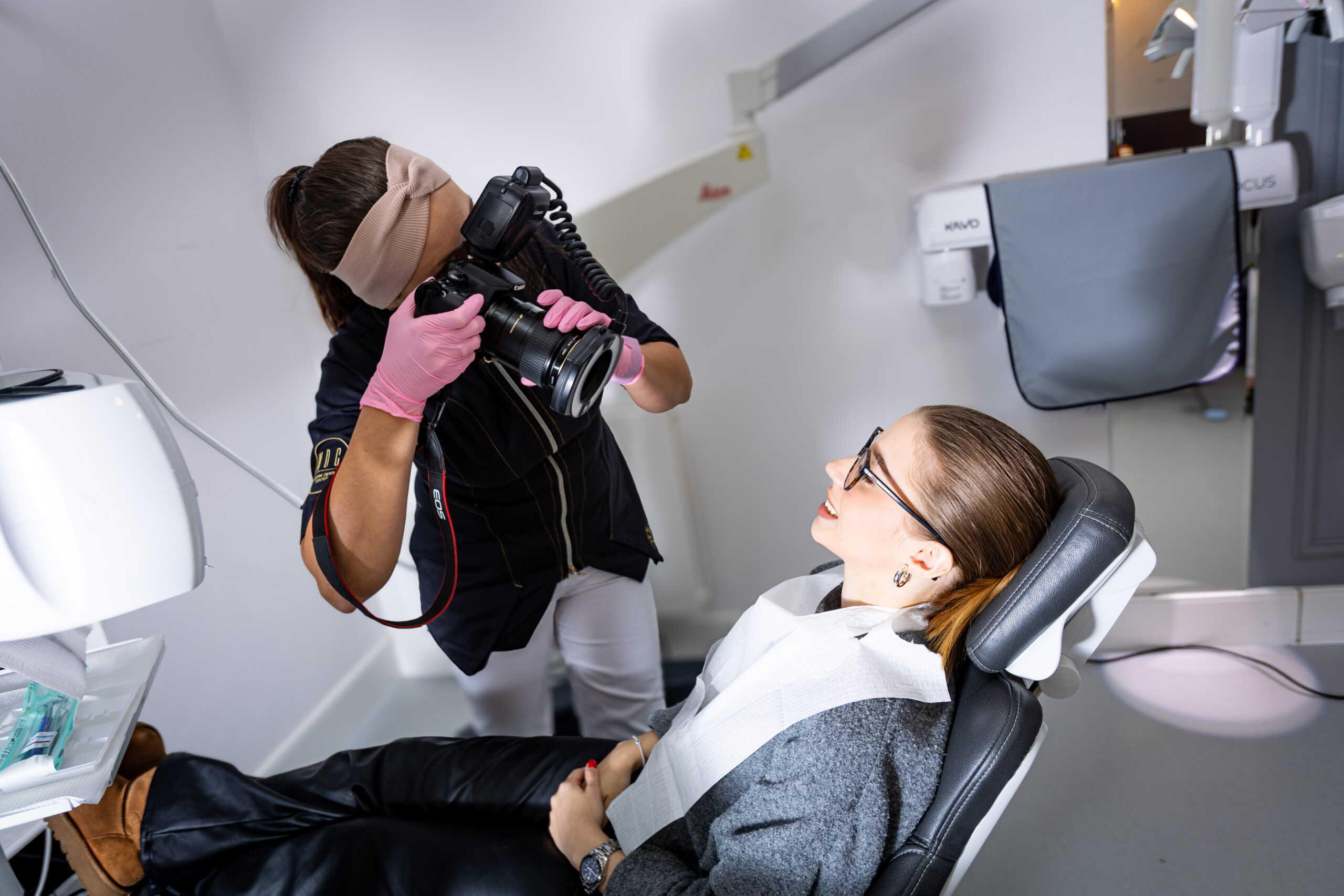
Dentist taking clinical photographs of a patient in a dental chair during a consultation at Warsaw Dental Center.
Clinical dental photography during a consultation at Warsaw Dental Center in Warsaw.

A biomimetic approach to reconstruction

A biomimetic approach means that treatment is not focused only on closing a defect. The goal is to rebuild the tooth in a way that respects natural structure, function, esthetics, and biomechanical behavior as closely as possible.

1. Maximum preservation of healthy tooth structure

2. Support for structural integrity

3. Margin seal and durability

4. Lower risk of cracks and recurrent decay

5. Long-term protection of the natural tooth

This is why this type of treatment can be more demanding and more time-intensive. The extra time and precision are not unnecessary complexity. They are part of a restorative strategy designed to reduce the risk of repeated repairs, more invasive treatment, or future tooth loss.
Precision, optics, and adhesion as the foundation of durable reconstruction

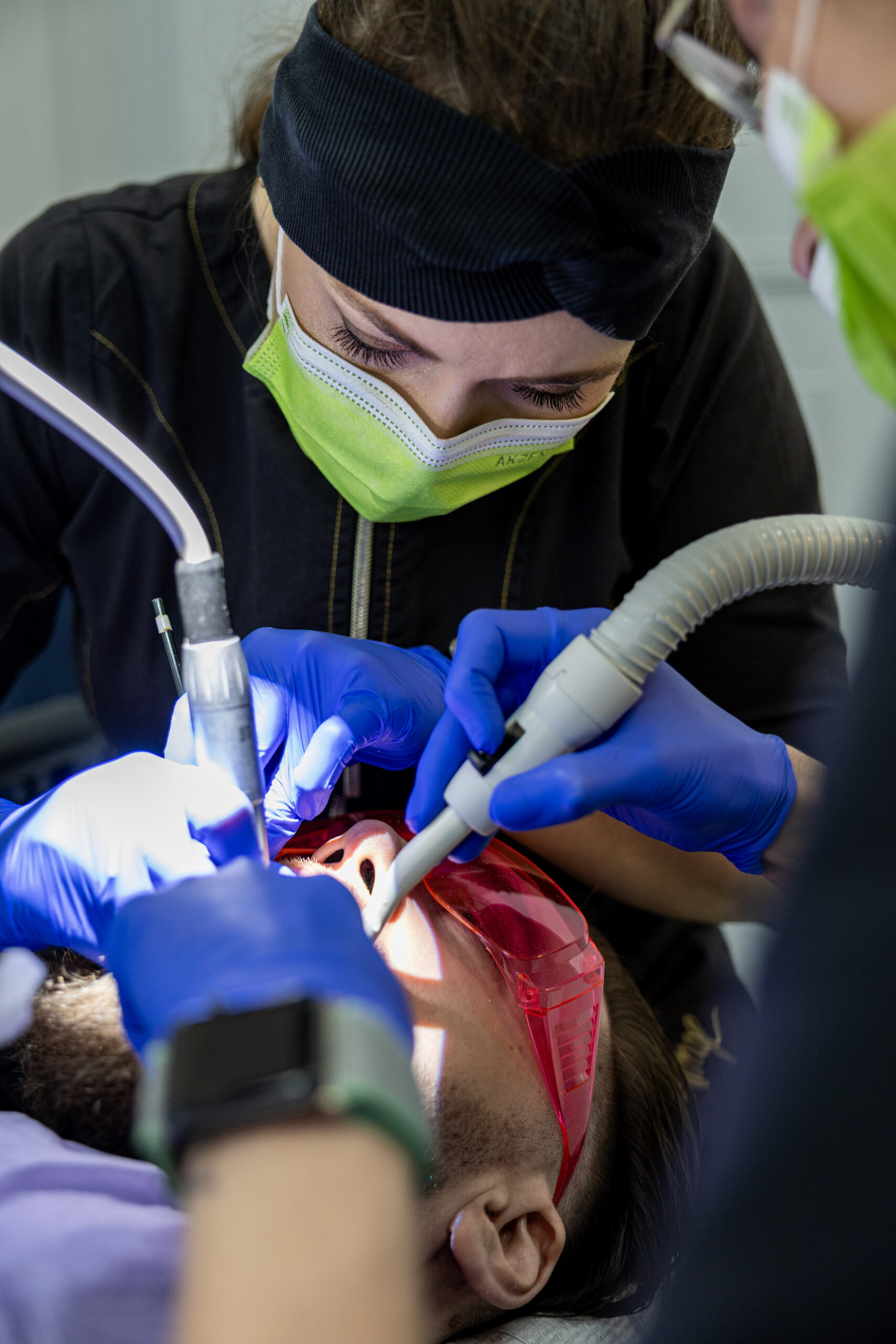
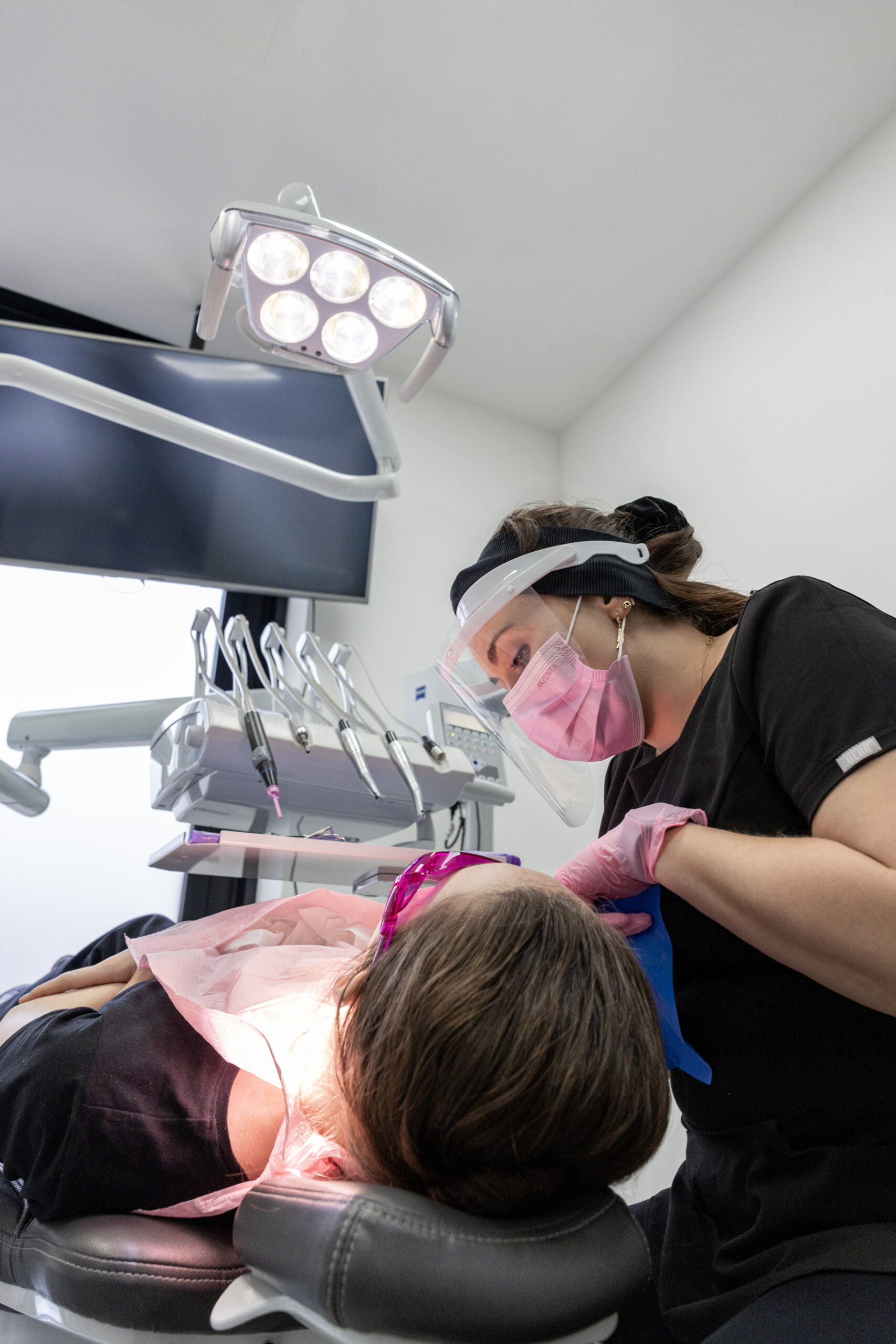
Dr. Natalia Rogulska performing a precise dental procedure on a patient at Warsaw Dental Center
Dr. Natalia Rogulska during a precise dental procedure at Warsaw Dental Center.

Microscope, optics, and treatment standard

Dr. Natalia Rogulska deliberately invests in world class clinical and diagnostic systems because she believes that the highest standard of care requires the highest level of control. In her work she uses advanced Canon, Leica, and Zeiss systems, and has also completed Leica training in the operation of this equipment.

These brands matter to her not only as equipment manufacturers, but also as companies actively involved in research, technology development, and the evolution of clinical standards. Their presence in everyday work at Warsaw Dental Center reflects a broader commitment to precision, innovation, and carefully delivered restorative care.

Working under magnification of up to 25x allows her not only to see more, but to treat more conservatively, more accurately, and with greater awareness.

Rubber dam isolation

In modern conservative and esthetic dentistry, rubber dam is a standard, not an accessory. Isolation gives full control over the clinical field and directly affects the quality of adhesion between the material and the tooth.

  • a dry working field
  • better adhesive predictability
  • lower risk of microleakage
  • greater restoration longevity

Modern adhesive protocols

Modern adhesive protocols and meticulous surface preparation play an important role in Dr. Rogulska’s work. Their purpose is to improve sealing, reduce post-operative sensitivity, and increase the long-term predictability of the restoration.

Her work includes advanced adhesive procedures such as Immediate Dentin Sealing, IDS, and bio-emulation techniques that support the seal, durability, and predictability of the reconstruction.

Dr. Natalia Rogulska providing dental care to a patient in a treatment room at Warsaw Dental Center
Dr. Natalia Rogulska providing attentive dental care at Warsaw Dental Center.

Detailed diagnosis and full treatment transparency

Canon Macro and Co-diagnosis

High quality clinical photography is not a marketing extra here. It is a diagnostic, esthetic, and communication tool.

  • more accurate treatment planning
  • better shade and tooth characterization matching
  • more precise communication with the laboratory
  • greater transparency for the patient

Detailed diagnosis and comprehensive planning

One of the strongest features of her work is that treatment does not begin with a procedure. It begins with a plan. Planning includes esthetics, function, material choice, overload risk, restoration durability, and long-term tooth protection.

  • very difficult reconstructions
  • teeth with major structural damage
  • esthetic treatment requiring a natural result
  • last chance cases
  • comprehensive rehabilitation of the smile zone
Dr. Natalia Rogulska providing dental care to a patient in a treatment room at Warsaw Dental Center
Dr. Natalia Rogulska providing attentive dental care at Warsaw Dental Center.
Dr. Natalia Rogulska using a dental microscope while treating a patient at Warsaw Dental Center
Dr. Natalia Rogulska using a dental microscope during treatment at Warsaw Dental Center

Cases that require more than standard treatment

Dr. Natalia Rogulska treats very difficult reconstructions of damaged teeth, meaning cases in which standard treatment is not enough. These situations require not only technique, but also judgment, especially when deciding whether a tooth can still be saved, how it should be rebuilt, and how it should be protected for the future.

  • maximum preservation of healthy tissue
  • seal and durability of the reconstruction
  • proper management of occlusal forces
  • esthetics consistent with natural dentition
  • honest evaluation of the limits of treatment

Borderline cases that require exceptional precision and responsibility

Dr. Natalia Rogulska specializes in borderline cases in which teeth previously referred for extraction may still have a realistic chance of preservation when treatment is carefully planned.

Through precise diagnosis, a biomimetic approach to reconstruction, and modern adhesive protocols, she focuses on saving teeth that might otherwise have been qualified for removal.

  • very detailed diagnosis
  • realistic prognosis assessment
  • experience in advanced reconstruction
  • precise adhesion and isolation
  • honest communication about possibilities and limits

This is not treatment built on promises. It is treatment built on precise evaluation, planning, and responsibility.

Important note

Every case requires an individual assessment because the decision to treat must be based on realistic prognosis, restorative potential, and clinical safety.

Dentist positioning a patient for dental smile documentation while another team member takes photographs at Warsaw Dental Center
Smile documentation and clinical photography during a patient appointment at Warsaw Dental Center.

Areas of focus

  • high level conservative dentistry
  • natural result esthetic dentistry
  • biomimetic bonding
  • veneers
  • very difficult reconstructions of damaged teeth
  • last chance treatment
  • detailed diagnosis and comprehensive planning
  • magnification up to 25x
  • microscope and rubber dam work
  • modern adhesive protocols
  • treatment planned for long-term tooth protection

How biomimetic reconstruction works

1. Inner layer reconstruction

The inner part of the tooth is rebuilt first, in a way that supports structure and resistance to load.

2. Outer layer reconstruction

The outer layer is then rebuilt to restore appearance, sealing, and functional surface anatomy.

3. Esthetic and functional integration

The final stage focuses on shape, color, translucency, texture, and the way the tooth works within the bite.

The result is a reconstruction designed not only to look good, but to behave as closely as possible to a natural tooth.

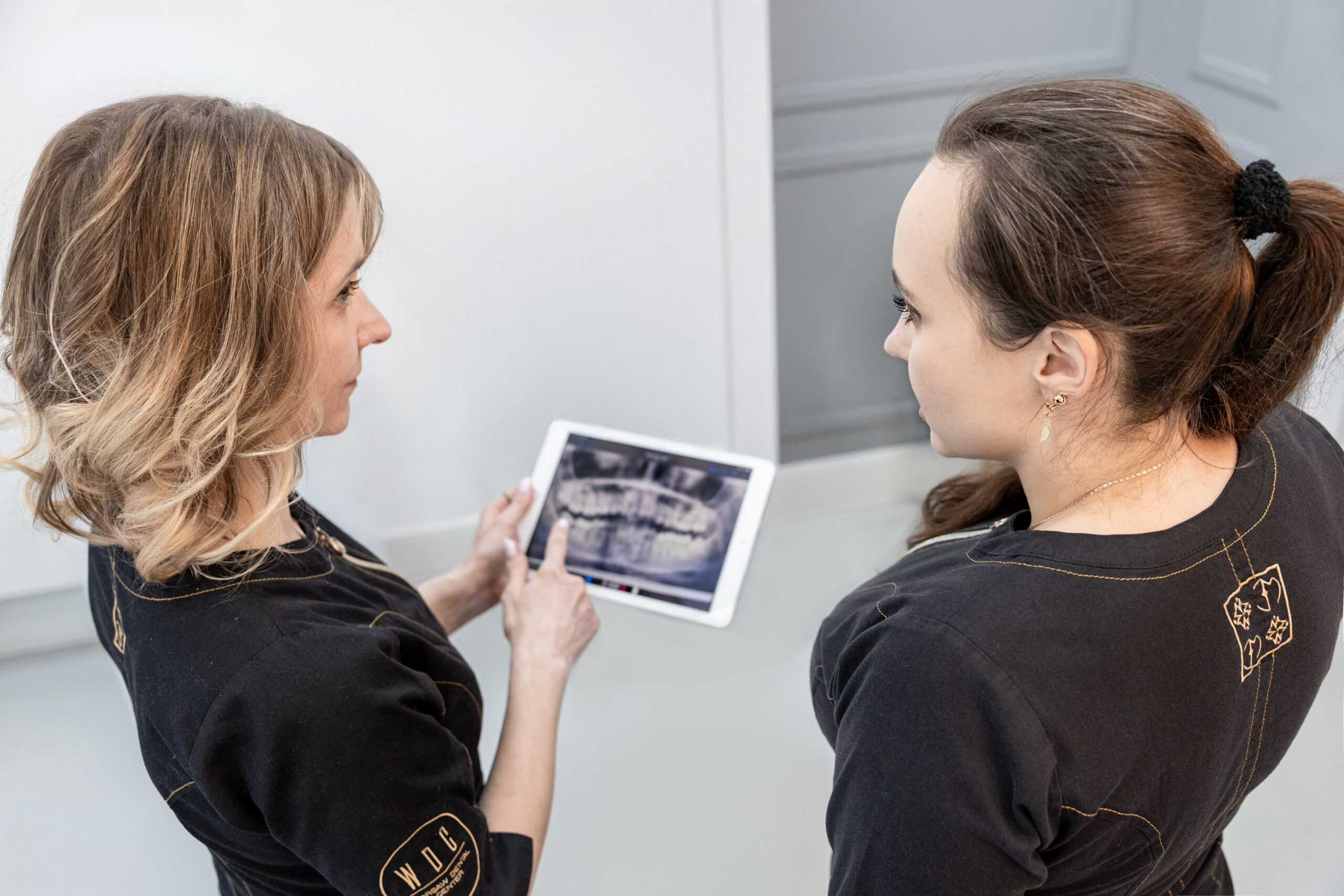
Dr. Urszula Leonczak and Dr. Natalia Rogulska reviewing X-rays

Esthetics and reconstruction require precise communication

In esthetic and reconstructive dentistry, close cooperation between the dentist and the technician is essential. It helps refine:

  • color
  • translucency
  • surface texture
  • the character of the natural teeth
  • function and bite contacts

Comprehensive planning may also include a preview of the intended final result before treatment begins, so that both the patient and the team share a clear treatment goal.

A clinician who not only treats, but also teaches and publishes

  1. For 5 years she served as a lead lecturer at WUM, and for the last 3 years she has continued to mentor upcoming clinicians through DentalWings. She also provides mentoring in conservative dentistry, helping other clinicians improve precision, treatment quality, and planning standards.
    Since 2016, she has been an author and co-author of articles in Magazyn Stomatologiczny and other professional journals, contributing actively to the development of modern conservative and esthetic dentistry.
    This adds a strong layer of authority to her profile, showing that she is not only a practicing clinician, but also someone who helps shape standards within the profession.
  2. This section works especially well with an image of her teaching, working under the microscope, or leading a practical training session.

Precision, esthetics, and balance beyond dentistry

Outside dentistry, Dr. Natalia Rogulska values time with her family. She enjoys painting, playing golf, and riding a scooter.

These interests reflect the same qualities that define her clinical style: precision, calm, esthetic sensitivity, and a strong sense of balance.

Book a consultation

If you are looking for a dentist who combines conservative dentistry, esthetics, biomimetic reconstruction, and highly detailed treatment planning, a consultation with Dr. Natalia Rogulska may be the right place to begin.

This kind of care is designed for patients who want more than a quick cosmetic improvement. It is for people who want treatment that is thoughtful, precise, and built for lasting results.

Knowledge base:
Frequently Asked Questions (FAQ)

Understanding your treatment plan is the first step toward a calm and stress-free experience. Below are answers to the most common questions patients ask during their surgical and implant consultations.

Dr Natalia Rogulska during a dental consultation

For patients

What does biomimetic tooth reconstruction mean?

It is an approach aimed at rebuilding a tooth so that it imitates natural structure, appearance, and function as closely as possible.

Can bonding look natural?

Yes. When bonding is carefully planned, it should blend harmoniously into the smile rather than look artificial.

How is microscope-based reconstruction different from standard treatment?

Microscope-based work gives greater control, helps preserve healthy tissue, and supports more precise treatment.

Does every badly damaged tooth need to be removed?

Not always. Some teeth can still be reconstructed, but this depends on careful diagnosis and realistic treatment planning.

What does “last chance” treatment mean?

It refers to treatment undertaken when a tooth is severely damaged but may still have a realistic chance of preservation with the right plan.

Why are rubber dam and modern adhesion so important?

Because they strongly affect sealing, the quality of the bond between the material and the tooth, and the predictability of the final result.

Kind words
from our patients
Schedule
your first visit
at Warsaw Dental Center!
Site links
Follow us

Warsaw Dental Center Leończak Sp.k.

NIP: 1182180875

Make an appointment

Umów wizytę